
DVD & Digital

DVD review: Foxcatcher

foxcatcher

In January 1996, tragic news from philanthropist John Eleuthère du Pont’s multimillion pound estate in Pennsylvania shocked the world. Eighteen years later, acclaimed director Bennett Miller has adapted the true story for the big screen, focussing on events leading up to the incident and du Pont’s dysfunctional friendship with wrestling champion Mark Schultz. Despite being a winner in his specialism, Mark (Channing Tatum) appears destined to be in the shadow of his older brother Dave (Mark Ruffalo), who also won gold at the 1984 Olympic games. Mark is approached by the eccentric du Pont (Steve Carrell) who invites him to live and train at his lavish wrestling academy, and to join Team Foxcatcher. An unnerving atmosphere looms over this biographical drama, the ominous tension heightened by colossal acting performances.

  The narrative explores the creepy, controlling persona of du Pont and how he manipulates the people around him. The pace of the build up is at times too slow, a lot of the preamble in the opening third covering Mark Schultz’s yearning to be noticed and to gain credibility in his own right, without the presence of his brother. When Mark meets du Pont initially, despite being isolated from his family, it is a positive change and he continues to prosper professionally. However, when his relationship with du Pont takes a sour turn, leading him to loneliness and illegal substances, their conflict produces the film’s most gripping moments. As the plot develops, Dave Schultz’s involvement adds to the dark dynamic and masculine ideals and ambitions cause character relationships to fracture further.

  Amidst Greig Fraser’s colour drained cinematography, Bennett Miller directs subtly and almost from a distance, giving the actors and their portrayals room to simmer gently before a boiling point finale. Known for his light-hearted comedy roles, Steve Carell warps mentally and physically into John du Pont.  With the help of make-up and a prosthetic hook nose, he is nearly unrecognisable and this is only the beginning of the transformative performance that has everyone talking. His dialogue is delivered in a chilling tone and his actions are never obvious. Tatum also ups his game enormously for his most sinister role to date, as does Ruffalo, presenting the Schultz’s as close siblings, in and away from the squared circle, but with competitiveness deep down, niggling away at their brotherly pact.

  Sadly in the run-up to the release, Mark Schultz has spoken out against the film and its apparent historical inaccuracies, verbally attacking director Bennett Miller on social media. I believe that there is always room for artistic licence when bringing real life events to cinema and whether it is factually correct or not, it is undoubtedly a powerful thought-provoking film. Miller again proves himself as a filmmaker capable of getting the very best out actors in roles they wouldn’t generally be cast in and tells the story intelligently and effectively. ‘Foxcatcher’ is never an easy watch but an essential one, and a main-eventer in this year’s awards season bout.

yellow_staryellow_staryellow_staryellow_star
See the trailer:

http://www.youtube.com/watch?v=8361stZ8n0w

DVD & Digital

DVD review: The Theory of Everything

theory
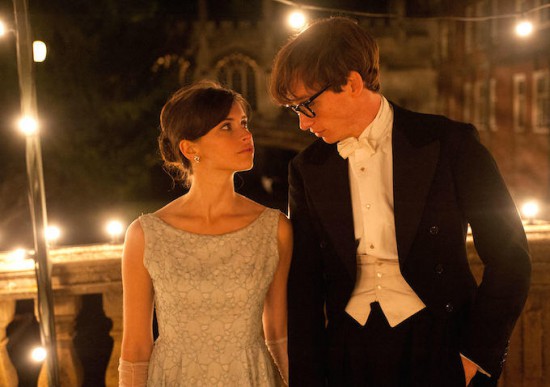
In a biopic heavy cinema season, great men and their stories have been immortalised on film, their strengths and achievements never to be forgotten. Based on the memoir ‘Travelling to Infinity: My Life with Stephen’ by Jane Wilde Hawking, director James Marsh documents the tragic, yet triumphant life of British physicist Stephen Hawking. With a hugely impressive central performance from Eddie Redmayne, the film tracks Hawking’s life from his complex marriage to Jane (Felicity Jones) to his scientific accomplishments. When studying at Cambridge University, he was diagnosed with motor neuron disease and given a mere two years to live. Despite his sense crippling illness, he persevered to subsist, his fulfilled existence defying the odds and making him one of the, if not the most decorated scientist of his generation, specialising in cosmology and writing a best-selling book ‘A Brief History of Time’.
  The narrative moves surprisingly quickly through the stages of Hawking’s life and the deterioration of his senses, and uses montage as a technique to almost gloss over key events such as his wedding day and the births of his children. I think because so much time passes, there is a lack of focus as to what the film is actually about. Is it about his illness? Is it about his marriage? Because Hawking is such a well known character, the retelling of his story does little more than offer some insight into his personality. With the same restrictions as Hawking himself, Redmayne does a fantastic job at portraying the internal struggle as well as the physical hurdles encountered as a result of his condition. Similarly, Felicity Jones is very good as his long suffering wife. The responsibility of caring for Stephen and of course her unwavering love for him takes its toll on her character as she loses the man she fell for in cruel instalments, and she expresses the range of emotions powerfully and effectively.
  In coaching superb acting turns from his romantic leads, director James Marsh succeeds and therefore it comes as no surprise that both Redmayne and Jones have been recognised with nominations for their suitably nuanced performances at the forthcoming awards ceremonies, both doing their counterparts justice throughout the severe highs and lows. However, the lack of direction in terms of exploration of themes was frustrating, leaving questions unanswered, particularly around the field of science. The subject matter is presented clearly, openly and honestly, but unfortunately doesn’t show all of the working. ‘The Theory of Everything’ is the study of nothing.
yellow_staryellow_staryellow_star
See the trailer:
DVD & Digital

DVD review: Birdman or (The Unexpected Virtue of Ignorance)

alejandro-gonzalez-innaritu-birdman

In the arts, fame can be incredibly brittle as many hit the heights of stardom to then fade away quickly, never to be spoken of again. Artistic merit and validation is therefore vitally important for those that ply their trade in the creative industries whether it be film, music or theatre. Black comedy drama ‘Birdman or (The Unexpected Virtue of Ignorance)’ directed and co-written by Alejandro González Iñárritu explores this theme through fictional actor Riggan Thomson (Michael Keaton) who makes a publicised comeback in adapting a Raymond Carver short story into a Broadway production, writing, producing and directing for the stage. Best known for his role as Birdman in a blockbuster superhero series, Thomson hopes to shed the mainstream association for theatrical credibility. Assisted by his loyal lawyer Jake (Zach Galifianakis) and his dysfunctional daughter Sam (Emma Stone), will his change of direction leave a lasting legacy or is he destined to be nothing more than a flash-in-the-pan?

A shaky cam follows Riggan around for a lot of the film, giving the impression of one continuous tracking shot. This helps create a fantastically frenetic energy that flows throughout, accompanied by a drums-laden soundtrack that never misses a beat. The script is spiking and satirical, and very often hilarious, giving a sharp social commentary on the pomposity of the industry and the people that inhabit it. As the show gets underway onstage, the character studies deepen off of it following the introduction of method actor Mike Shiner who clashes with Riggan. Scenes involving the two are among the film’s strongest moments as their dialogue bounces off one another with brilliant rhythm. Shiner’s friendship with Sam also serves as an effective subplot as they take to the theatre roof to philosophise on the highs and lows of showbiz.

The style of the film can at times be a lot to take in due to the chaotic cinematography and editing, as well as the wistful fantasy tangents. The strength of the acting keeps the aims and concepts grounded even with the characters aren’t. Michael Keaton is perfectly cast as Riggan, due to the obvious comparisons to his own career – he is arguably most associated with his nineties portrayal of Batman. The schizophrenic nature of the performance is handled tremendously as he is haunted by hallucinations of his most famous incarnation. Whilst Norton and Stone almost steal the show completely with their excellent screen relationship, stellar support also comes in the way of Naomi Watts and Andrea Riseborough, completing a cast that really do their bit to fit the bill.

‘Birdman’ is rightfully tipped for awards success and we may see life imitating art come the ceremonies. Iñárritu goes against the grain of trends and reboots, intelligently telling a story which surrounds the oldest traditions of performance art but which is laced with digital media and pop culture references. In doing so, he has created something which feels very unique and original, in both its visual style and subject matter. For me, it fully deserves the credit it will receive and could ironically reignite the career of its leading man.

yellow_staryellow_staryellow_staryellow_staryellow_star
See the trailer:
DVD & Digital

DVD review: The Hobbit: The Battle of the Five Armies

THE HOBBIT: THE DESOLATION OF SMAUG
After a combined running time of 1032 minutes, Peter Jackson’s six-part Middle-Earth saga draws to a close with The Hobbit: The Battle of the Five Armies, rounding off the prequel Hobbit trilogy. Picking up directly where the second instalment left us, Bilbo Baggins (Martin Freeman) and the squad of not-so-merry dwarves look on in terror as the recently awoken dragon Smaug (Benedict Cumberbatch) rains fiery hell over Lake-town. With the dwarf’s leader Thorin Oakenshield (Richard Armitage) back in his beloved Lonely Mountain in Erebor, will he maintain control of his kingdom or will he succumb to the greed that comes with the almighty power? Everyone and their army now feel a sense of entitlement to their share of the treasure that lies at the bottom of the mountain, so battle inevitably follows.
 I don’t think it’s unfair to say that the recent Hobbit films haven’t achieved the same sense of spectacle as the Lord of the Rings and the same problems from Desolation of Smaug carry through into the final part. The continuation of the elf-dwarf-elf love triangle is an irritating subplot, with Legolas popping up now and again to do little more than hop across stones and have a little moan. The development of Thorin’s story arc is, to me, one of the highlights of the series, culminating effectively in an interesting character study that explores what can happen when you get everything that you’ve ever wanted. His friendship with Bilbo provides a few touching moments, and helps bring the hobbit himself into what is supposed to be his story after all.
  In the midst of all the fighting and the questionable high frame-rate CGI, there are a few performances that deserve some credit. Ian McKellen and Christopher Lee are as strong as ever as the all-conquering wizards Gandalf and Saruman, their story nodding towards what is ahead, making it increasingly tempting to dig out the Fellowship of the Ring DVD. Martin Freeman comes into his own finally as Bilbo, the portrayal bettering as the character grows in confidence and stature. Richard Armitage impresses the most as Thorin, powerfully conveying the swaying nature of the character’s inner conflict. In an all star cast, Ken Stott, Stephen Fry and Billy Connolly stand out from the supporting actors, though the latter’s appearance is nothing more than an amusing cameo.
  By now, the sight of Peter Jackson’s Middle-Earth is comforting to fans of the series and the finale provides a solid, if slightly subdued conclusion. Taking an overview of the story, the Hobbit novel is aimed predominantly at a young audience and has a primitive plot at its heart. In its cinemakeover, Jackson’s vision has stretched and contorted it, turning Tolkien’s short book into a near ten hour epic, perhaps for monetary gain and to fulfil his own artistic ambition. Where some flourishes work and his flair for stunning set pieces is unfaltering, others sadly don’t. Despite its flaws, ‘The Battle of the Five Armies’ is an enjoyable closing chapter to what is arguably one of the best cinematic franchises of all time.
yellow_staryellow_staryellow_starhalf star
See the trailer:
DVD & Digital

DVD review: The Infinite Man

the-infinite-man-sxsw-movie
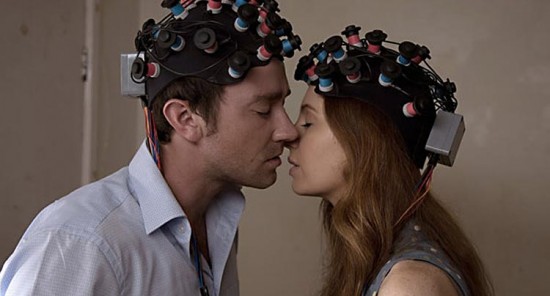
A new breed of films are surfacing in the forever changing cinema industry. Independent science fiction, or sci-findie if you will, is a forming genre which takes elements of futuristic technology – in this case time travel – and applies it to a simple story, with no aliens or laser beams in sight. Australian comedy ‘The Infinite Man’, written and directed by Hugh Sullivan, has one location, three actors but a great deal of creativity and intelligence. Dean (Josh McConville) wants to recreate the perfect anniversary weekend with his girlfriend Lana (Hannah Marshall). He takes her to same holiday resort, which unbeknownst to him is now closed and deserted, and has an agenda to repeat the same activities. However, when Hannah’s ex Terry (Alex Dimitriades) appears, his carefully laid plans go terribly awry.
One year later, a heartbroken Dean digs out a ridiculously looking time-travel device which he has cooked up ‘in the lab’ and proceeds to send himself and Lana back in time to give it another go. Of course, this backfires when his current self follows suit, trapping the characters in an infinite loop of misery, jealousy and hilarity. Despite the narrative repeating itself, it never becomes uninteresting and actually gets funnier as the plot develops and we see Dean become hysterical in his pursuit of eternal happiness. The dialogue has the same quirky edge and unenthused tones as that in the New Zealand sitcom Flight of the Conchords, and is delivered with impressive comic ability by all involved.
The inventiveness of the plotting means that the viewer is always kept thinking, and the low-budget environment becomes an intimate microcosm of unrequited love. I hope that the work will reach a wide audience after its festival reception, and it’d be intriguing to see where the ideas could travel with more money to spend. Until then, ‘The Infinite Man’ is substantial proof that big ideas can work well on the smallest of scales, and is a notable feature debut for film-maker Hugh Sullivan.
yellow_staryellow_staryellow_starhalf star
See the trailer:
DVD & Digital

DVD review: Interstellar

Interstellar_68031

Christopher Nolan is undeniably one of the most ambitious, forward thinking filmmakers working in the industry today. Known for writing and directing mind-bending films such as Inception and Memento, his thought-provoking style pushes the boundaries of cinema, challenging audiences to unravel his narratives. His latest picture is sci-fi epic ‘Interstellar’ and it is perhaps his most daring yet. Set on a decaying planet Earth running low on natural resources, Matthew McConaughey takes the leading role as former NASA pilot Cooper and is tasked with the almighty responsibility of finding a new home planet for the human race. After much deliberation with his daughter Murphy (Mackenzie Foy) and persuasion from Professor Brand (Michael Caine), he leaves his family behind for the greater good, taking off with biologist Amelia (Anne Hathaway) for a journey through space and time.

Continue reading “DVD review: Interstellar” →

DVD & Digital

DVD review: The Drop

Tom_Hardy_The_Drop

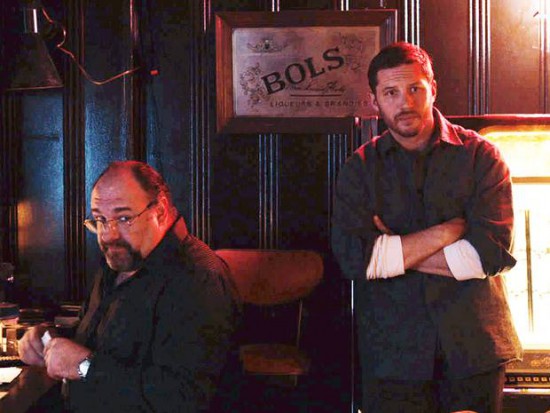
In a year that has pushed the envelope in terms of experimental filmmaking, is there still a demand for simplistic cinema? Or is it in fact more ambitious to do the stripped-back style well, with solid acting and an intelligent script, than convolute your story with gimmicks to stand out from the crowd? Belgian director Michaël R. Roskam brings together an excellent cast for neo-noir drama ‘The Drop’, which harks back to the classic gangster genre movies where nobody can be trusted and danger lurks around every corner. Tom Hardy stars as soft-spoken and unassuming bartender Bob Saginowski who looks after a drinking den alongside his Cousin Marv (James Gandolfini), which is regularly used as a ‘drop’ for the local lowlifes to launder their illegally gotten gains. When a robbery takes place after hours, Bob and Marv find themselves in a precarious predicament, forced to face the wrath of the mob.

Brooklyn’s grimy underworld provides the backdrop for Dennis Lehane’s tightly woven script to unfold. Having previously worked on The Wire as well as collaborating with legendary crime film director Scorsese, his influences are clear as they bleed into the flawed but fascinating characters. Very much character driven rather than narrative driven, the study of the morals and masculinity of the protagonists is always interesting and an appealing subplot plays out naturally about the responsibilities involved in taking on a pit bull pup. While events never really veer too far out of the ordinary story-wise, Roskam puts on a masterclass in tension building, heightening to a satisfying final third.

It is of course terribly sad that this film will mostly be remembered for featuring James Gandolfini’s final screen performance, but it is testament to how phenomenally gifted he was as an actor. Widely known for his long-running portrayal of New Jersey mob boss Tony Soprano, he was an expert in complex multi-faceted drama and playing cowardly Cousin Marv serves as a fitting swansong. Not to be outdone though is Tom Hardy, who matches Gandolfini blow for blow in a battle of acting prowess and again proves himself as one of the best of his generation. He gives a controlled and more subtle turn than we are used to seeing from him, nailing the accent and showing that sometimes less is more.

‘The Drop’ is an effective throwback genre picture, and what it lacks in narrative imagination, it makes up for with the powerful screen presence of the leads. The term ‘actor’s movie’ has never felt more apt. Roskam and screenwriter Lehane present a bleak Brooklyn exterior, an unappealing interpretation of the big apple which hides a black and bloody core of corruption. In this environment, it is equally dangerous whether you’re propping up the bar or serving beers with Bob and Marv from behind it, but where Hardy and Gandolfini are concerned, consider the metaphorical acting bar raised.

yellow_staryellow_staryellow_staryellow_star
See the trailer:
DVD & Digital

DVD review: ’71

71film

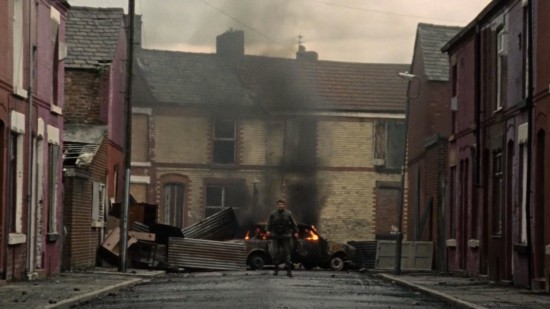
In his feature length debut, Yann Demange’s action thriller takes us to the height of the Troubles in Belfast where political conflict lasted for over a quarter of a century.  We witness the hostilities through the fearful eyes of a young British soldier called Gary Hook (Jack O’Connell) whose squad is caught in the middle of a riot, and who is accidentally left behind by his unit after events go terribly awry. As he desperately tries to get back to his barracks and fights for survival, he becomes embroiled in a local war of corruption and betrayal. This is a brutally realistic depiction of terror, enhanced by yet another stunning performance from one of Britain’s best.

There is a patient build-up as we’re first introduced to Private Gary Hook, and we get vital glimpses of his youthful innocence before he is thrust into the face of danger. The grainy cinematography as well as the shaky camera techniques assist in creating a pragmatically dangerous environment. An excellent chase sequence had me gripped as the protagonist is hunted down by a ruthless gang of nationalists. Tension drops slightly as Hook meets a young impressionable protestant who seems born to hate the ‘fenian bastards’ as he so eloquently, and continuously puts it. Their brief encounter offers the only glimmer of humour as the youngster struts the dishevelled streets like a mafia boss, but the friendship is brought to an abrupt, shocking climax which highlights the atmosphere of the film and illustrates how treacherous the situation was in Northern Ireland at that time.

In a role much more subtle and understated than we are used to, Jack O’Connell is excellent. With very little dialogue, his performance relies on his range of expression as well as his general screen presence. Earlier this year, we saw him in Starred Up as a disturbed prisoner, visceral and violent. Here, he is vulnerable, and lost in a antagonistic environment that he knows little about. Support comes in force from Paul Anderson and Sean Harris as crooked figures of authority. Harris’ squirrel faced villain is chilling, and with trouble around every corner, so-called factions are paper thin as every character seems willing to stab their allies in the back. The final third plays out a little predictably, though not without moments on extreme intensity as all sides close in on Hook and each other.

The focus of the thriller as a whole leans less on being a story of the Troubles as such, and more a survival movie as the lead is attacked from all angles throughout. It marks an impressive foray into cinema for the director Demange, who along with writer Gregory Burke and composer David Holmes, captures the threatening mood brilliantly. The main strength of the piece is the central turn from O’Connell. We’ll see him on the big screen again soon, this time as an American soldier in Angelina Jolie’s WWII directorial debut Unbroken, which demonstrates the impact he is having within the industry. Until then, we can celebrate the year he has in British film – the rising star has reached new heights.

 yellow_staryellow_staryellow_staryellow_star

See the trailer:

DVD & Digital

DVD review: Mr. Turner

mrturner

Joseph Mallord William Turner was a complicated man, revered for his pioneering painting style, but his reputation tainted by his life away from the easel. In typically fluid fashion, veteran British filmmaker Mike Leigh writes and directs a biopic of the artist, which looks at the latter stages of Turner’s life. The great Timothy Spall stars in the eponymous role, and the narrative follows how he balanced his passion for his art with his personal demons. Both Leigh and his regular cinematographer Dick Pope are long-time fans of J.M.W. Turner and this comes across strongly on-screen as the director’s style departs from the zany and improvisational and is executed with great care and precision.

Continue reading “DVD review: Mr. Turner” →

DVD & Digital

DVD review: Set Fire to the Stars

set-fire-to-the-stars
In 1950, the troubled Welsh poet Dylan Thomas ventured to New York City to read at universities around the country. The man who made this possible was a professor called John Malcolm Brinnin. His account of this time, titled Dylan Thomas in America has formed the film ‘Set Fire to the Stars’, directed by Andy Goddard. Elijah Wood and Celyn Jones star as Brinnin and Thomas respectively. Filmed in glorious black and white, the story explores their friendship and Brinnin’s struggle to understand and tame Thomas’ whirlwind lifestyle as he spirals out of control.
  The stylish, often snowy, city backdrop is presented impeccably, the clean and slick cinematography suitably matches John’s pristine appearance but clashes with Dylan’s haphazard existence. Initially, after an excellent opening sequence, it seems as though Brinnin, who is an obvious admirer of his work, is using Thomas for his own personal gain, but as he peels back the layers of his complex individual, he soon cares for and befriends the tortured soul. Dylan deflects attention to his talent by causing controversy and making lewd remarks, including reciting inappropriate yet amusing limericks. The performances though, of the poetry itself, are electric.
  Despite their differences, they share the odd moment of togetherness and acknowledge the mutual respect they have for one another. A scene in which they pull an all-nighter to grade student’s work is majestic, as they discuss language over coffee and cigarettes. The mise-en-scène showing the passing of time is poetry in motion. Wood and Jones perform very well, and bring the necessary charisma and energy to their roles. An impressive supporting cast including Shirley Henderson, Kevin Eldon and Kelly Reilly is solid, and their characters are involved in carving out the personas of the two leading men, showing other facets of their deep personalities and hinting at their complicated pasts.
  ‘Set Fire to the Stars’ illustrates the fact that you don’t have to be a musician to live the rock and roll way, and Dylan Thomas is proof of that. In the city that never sleeps, he enjoyed an excess of fatty food, red eye liquor and feisty women while Brinnin cleaned up the mess he left behind. This is an enjoyable, and informative biopic with an excellent display of acting that sheds some light on the man behind the words of wizardry. Dylan says to John in one scene whilst dissecting his poetry that understanding is the least important thing, and that feeling the emotion behind it comes first. Perhaps the same could be set for him as an artist and his life, and this adaptation certainly feels satisfying.
 yellow_staryellow_staryellow_staryellow_star
See the trailer: