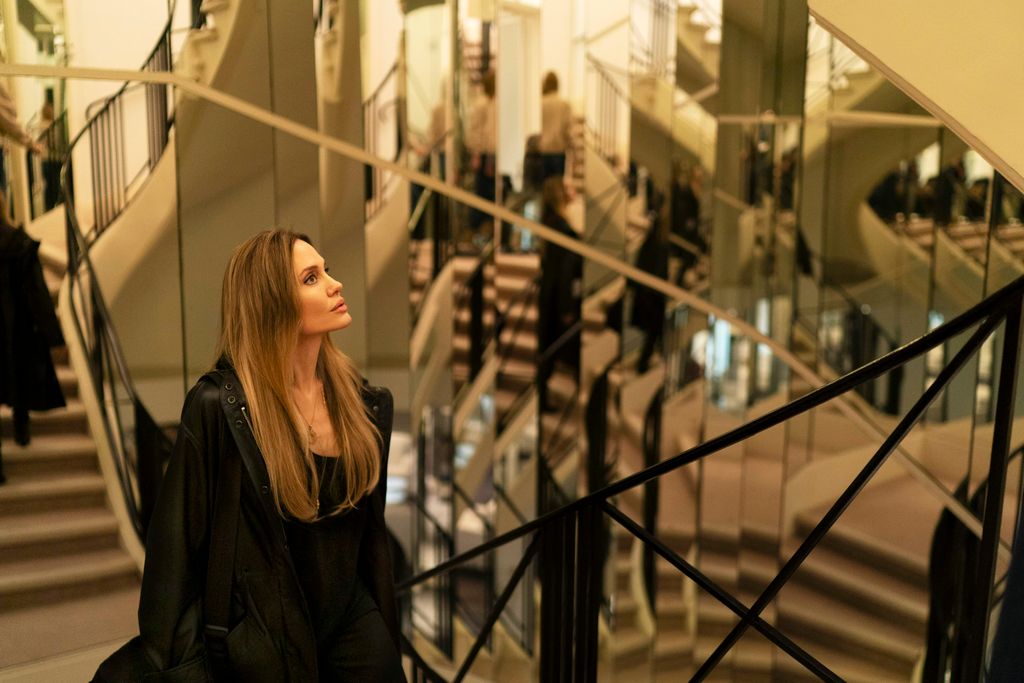
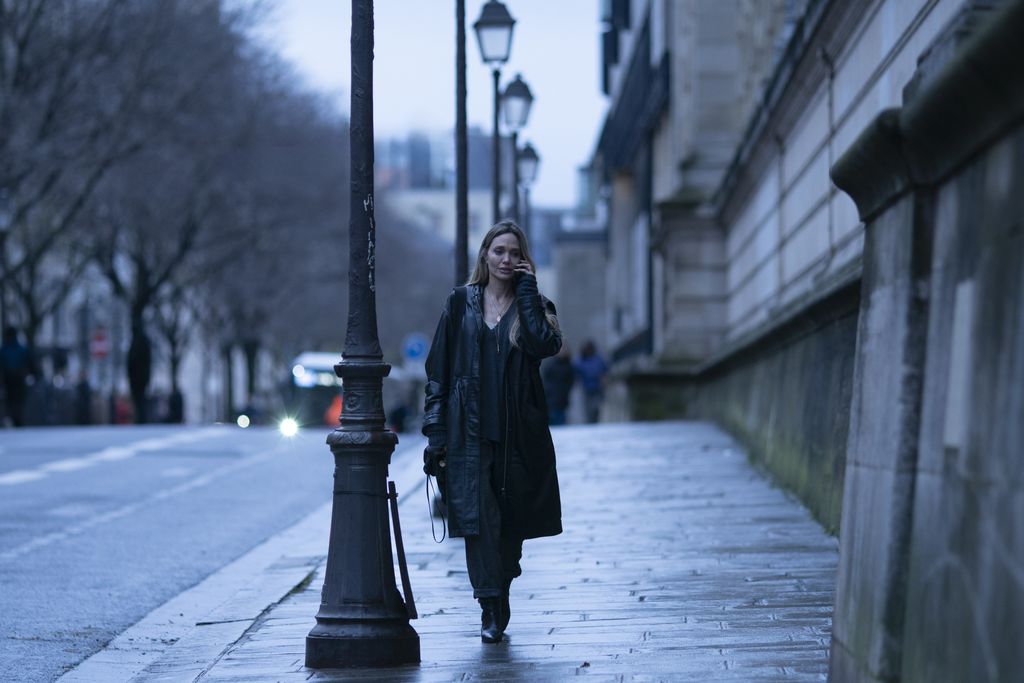
Difficult to define by genre, writer and director Alice Winocour is a self-proclaimed cinephile who wants to explore all types of films. Her latest drama is Couture, which marks her English-language debut and takes place during Paris Fashion Week. Angelina Jolie stars as artist and filmmaker Maxine Walker and the plot gives us a glimpse behind the glitz of the star-studded event as three women face very difficult challenges. After its UK premiere at Glasgow Film Festival earlier this year, I was lucky enough to sit down with the director to discuss the piece…
It’s noted that your work not only spans various genres but has taken place all over Europe. Your last two films, Couture included, have been set in Paris. What do you think has pulled you back to your home city to tell these stories?
Yeah, actually it’s a good question as to me, my work is so personal and intimate that it always has to be set in a very distant world. I prefer fiction to be far away from me…then I really enjoyed shooting in Paris for Revoir Paris, and it felt very fresh to me. I feel very European as a director, and I’m attracted by European countries in my identity.
I live in a neighbourhood in Paris where there’s a lot of young designers who present their shows, so when there is a fashion week, I see a lot of people coming from very different parts of the globe. It’s a very intense feeling to be in the street and look at this. One day, I came out of the hospital and I found myself in the kind of fashion world – that world of glitter coming from the world of the hospital, which was a bit of a war zone. I saw a South Sudanese girl who also seemed totally lost, and I felt I could really connect very, very intensely to her. I wondered who this girl was and what her life was like – this was the beginning of Couture, really.
Instead of focusing on fashion, your story looks at the women behind the scenes…
Yes, I like to tell stories from another perspective or a point of view I haven’t seen represented. It was the same with Proxima, the movie I did about the space world. I have seen a lot of films representing NASA and American space agencies, but we rarely see astronauts that are very vulnerable and suffering. It’s really the opposite of what I was seeing in those films. I was interested in the idea of showing backstage of fashion shows. We see the point of view of a young African girl, coming to a country she doesn’t know and learning the crazy rules of fashion. I was interested in all those little details, you know. Things we see in the film like the hair of a seamstress being in every dress are real stories and this was very interesting to me.
I enjoyed the structure of the film and how it organically moved from one character’s story to the next in a linear way. Why did you opt for this method as opposed to just cutting between them?
I’m glad you noticed because actually it’s really kind of complex storytelling, and it meant that lots of those transitions were found in the editing room. We had to rework it as intersecting all those lives gave it a flow. There were really cool scenes that I really loved that I had to put in trash because the rhythm had to be smooth, kind of like an opera.
I felt for this movie because it was what I had experienced being between life and death, you know. You really look at life in a very different way. You really see the life around you pulsating and I had written those kinds of characters before like the heroine of Revoir Paris is also in this kind of limbo because she’s post-traumatized and sometimes post-traumatized characters are a bit in between like angels, not really there anymore. They’re there with a body, but they are floating a bit, so it was interesting to me to have a kind of a very singular construction or way of telling these stories. I wanted to make a poetic film, cinematic, and I was more interested in the details in the lives of people more than serial storytelling with cliffhangers, turning points, and whatever. It was a bit of a concept but it was also the idea of celebrating life and showing how those little details which seem so fragile can be the most important things in life.
You’ve worked in different genres now from sci-fi to thriller but your films always feel very rooted in the humanity of your characters. How do you approach genre storytelling?
Yeah, what I love about genre is that there are rules and also if it’s a horror movie, you can do like a very bloody film and yet be really personal and intimate. It comes also from my cinephilia from my childhood. I’m kind of a cinema geek and when I was watching films with my little brother, Psycho was one of my favourites. I watched it a lot and I’ve also always liked Rio Bravo, the Western. Genre has always been very attractive to me but I try to look at a story from a pretty strange point of view.
If you had an unlimited budget and could work in any style, what would you love to make?
My first ever film was a period film set in a psychiatric hospital. It was a strange Gothic love story between a patient and a doctor. My budget was very little so I’d love to make a period film again, like a Visconti movie like Le Guépard (The Leopard). ! I’d love to stage a ball!
A constant through your films is strong leading characters and you have Angelina Jolie as the lead in Couture. I liked the casting as although Paris Fashion Week might feel like a familiar space to her as an actor, it feels quite alien to her character. Can you talk a little about working with her on this?
Yeah, she came really at the end of the process as first of all, I had no idea who would play the part of Maxine. It was so personal and it was really more than a movie to me.
At the end, I thought I needed someone who has this particular connection to the movie as well. It has to be also for the actress, more than a movie. I thought about Angelina Jolie and I really like the idea of seeing behind the image of a big star or an icon – to see who is the woman behind this image. She’s a warrior and she’s very strong in her life and in her characters so I thought it was interesting to show the vulnerability of a very strong woman. I couldn’t really explain it but I felt so close to her. We shared a lot and she’s a director too. She’s very punk also in a way – she used to be a punk in her teenage years, but she still is, I think.
And you mentioned your debut film (Augustine) earlier which I know starred Vincent Lindon. How was it working with him again now, and what do you think you’ve learned as a director since then?
It’s funny that you mention it as it was kind of a joke for us. He’s the first actor who really trusted me and made the film possible as he was already very famous. We stayed very close. It was fun for us that he’s drawing on Angelina’s breast in Couture as he was drawing on the breast of the actress in my first feature. He said to me, “what is the problem you have with me drawing on women’s breasts?”
I don’t really know what you can learn [about directing]. It’s a strange thing with movies. To me, it’s really like love stories. Even if you have lived lots of love stories, it’s never the same, and it’s not like you learned something. It’s always different and that’s the beauty of it. It’s always a new adventure, new encounters, a new world you’re living in. The collective work of cinema is something very, very, beautiful, and I think it’s kind of like a hard drug – it’s really difficult to get rid of it.
Couture is available on Digital HD from 20 April. Distributed by Signature Entertainment


