It is a well established staple of Disney pictures to strike just the right emotional chord with audiences, having the ability to make us laugh in one scene and cry in the next. Continuing their hugely successful relationship with Pixar Animation Studios, the next collaboration personifies the emotions themselves to explore the goings on inside the brain of a child. Directed and co-written by Pete Docter, best known for his work on Up, ‘Inside Out’ mostly takes place in the head of an eleven year old girl called Riley whose family up sticks to San Francisco, taking her away from her friends and the home comforts of Minnesota. Dealing with the change from within the conscious mind known as Headquarters are Joy (Amy Poehler), Sadness (Phyllis Smith), Fear (Bill Hader), Anger (Lewis Black) and Disgust (Mindy Kaling), who work in harmony to keep Riley content. However, when Joy and Sadness are removed from HQ through the memory tube leaving the others to hold the fort, they must find their way back to restore normality.
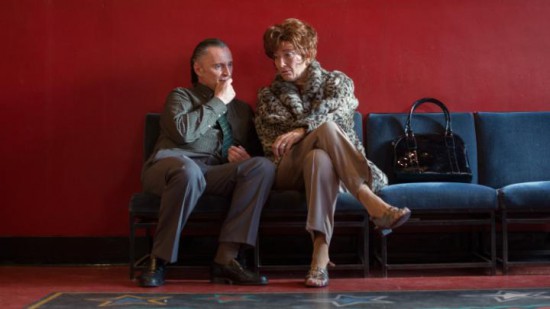
An adaptation of the first in the a series of seven books from Scottish novelist Douglas Lindsay, ‘The Legend of Barney Thomson’ is the feature debut of actor turned director Robert Carlyle, and tells the comic tale of a hapless barber, played by Carlyle himself, who escapes the mundanities of his existence by accidentally becoming a serial killer! Before long, cockney copper Detective Inspector Holdall (Ray Winstone) is on his case, and Barney is forced to turn to his chain-smoking, bingo-loving mum Cemolina (Emma Thompson) to get him out of trouble.
Filmed in the director’s home of Glasgow, the city is coated in a sheen which goes against the gritty stories it usually provides a backdrop for and sets it in a more favourable light with comic-book elements suited to the black comedy subject matter. The sick wit is presented in a way that shows influence from his friend and previous collaborator Irvine Welsh and the cinematic adaptations of his novels. Techniques like Barney’s narrative voiceover and the colloquialisms such as “nae patter” in the dialogue serve to extenuate the similarities. Because of this stylistic approach, a Filth meets Sweeney Todd vibe is created, and the obvious comparison to the latter is eluded to in the script. The overarching plot and its structure take a familiar shape pretty quickly when Barney’s accidents spiral out of control, so much so that you can almost find humour in moments before they occur on screen.
Because of its air of predictability where the story-telling is concerned, the film relies on the performances from its experienced cast, and boy has it got one. Carlyle himself is hugely impressive as sappy Barney, managing to create likeability and empathy for the protagonist, given his careless homicidal activity. The scene stealer is Emma Thompson, who is nearly unrecognisable from a physical standpoint. Despite being just two years older than Carlyle, she carries off the role as his eccentric mother with ease, due to clever prosthetics and sheer talent. She is certainly the most memorable from the supporting characters, and brings the biggest laughs with her dry delivery in a finely tuned thick Weegie accent. Winstone is caricature-like but entertaining as a fish-out-of-water Londoner and other small job stand outs include Brian Pettifer and Tom Courtenay.
‘The Legend of Barney Thomson’ takes a simple, yet incredibly funny story, and successfully transforms it for the big screen. Boasting a creative, visual richness and a fun, old fashioned soundtrack, Robert Carlyle shows a lot of promise in moving behind the camera, and in getting strong performances from those in front of it whether he wishes to or not. Given the vast versatility in his acting back catalogue, there is potential in whichever genre he should wish to venture into next. The director’s chair is a comfortable place for Carlyle to sit, but I for one won’t be resting in Barney’s barbershop chair any-time soon!
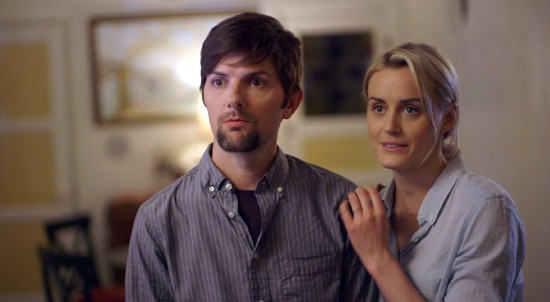
‘The Overnight’, written and directed by Patrick Brice, and produced by mumblecore duo Mark and Jay Duplass, explores the relationship of a married couple with a young son, settling into their family home in Los Angeles. Stay at home dad Alex (Adam Scott) and his career-driven wife Emily (Taylor Schilling) are happy, if a little unfulfilled due to some post-matrimonial coital issues, and seek new friends and experiences. On an outing at the local swing park, they meet Kurt (Jason Schwartzman), a trendy hipster-type in a hat, who invites them to ‘pizza night’ with his wife Charlotte (Judith Godrèche) and their son. They accept the offer and eagerly attend, armed with friendly faces and a bottle of cheap plonk, but when it gets late and the kids are put to bed, they find that the evening has more in-store for them than they’d bargained for.
Carrying on the trend of not leaving perfectly good film franchises alone, Spielberg’s 1993 dinosaur epic is next to get the 21st century makeover, only this time it is a sequel rather than a remake. With much anticipation surrounding it, the unenviable but exciting task of directing falls to relatively unknown Colin Trevorrow. This instalment, set a whopping twenty-two years after its predecessor is ‘Jurassic World’, and stars man-of-the-moment Chris Pratt following his success in Guardians of the Galaxy. Brothers Zach (Nick Robinson) and Gray (Ty Simpkins) are packed up and sent away to Jurassic World by their feuding parents to be looked after by their Aunt Claire (Bryce Dallas Howard). This clashes with a busy weekend for the theme park, and when the ‘unthinkable’ happens and a genetically modified hybrid dinosaur branded the Indonimus rex escapes from its enclosure, it is up to velociraptor trainer Owen Grady (Pratt) to save the day. This has the intense action that all good blockbusters should and excellent special effects to boot, but has the inexperienced Trevorrow bitten off more than he can chew?
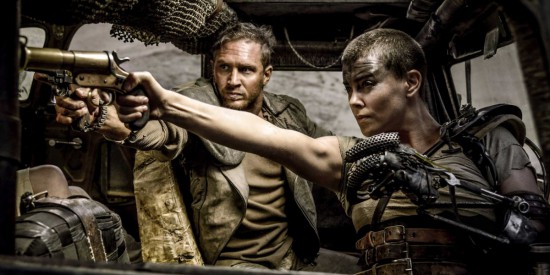
After a two decade break in the series, madcap Australian director George Miller has revisited the post-apocalyptic world of Mad Max with new instalment ‘Fury Road’. Now with a bigger budget to throw at the project, his vision has the scope to reach new heights, and on this occasion Tom Hardy takes the titular role of Max Rockatansky, following in the footsteps of Mel Gibson. The story of survival takes place on desert wasteland in the aftermath of nuclear war, and ex-police officer Max is captured by a gang known as the War Boys, led by Immortan Joe (Hugh Keays-Byrne), and is used primarily as universal blood donor. When Imperator Furiosa (Charlize Theron) rebels against the regime, driving her tanker truck off-route with five of Joe’s hand-picked wives, a chase ensues to retrieve them, and sick War Boy Nux (Nicholas Hoult) also heads out in hot pursuit of the escapees, taking Max along for the ride as his own personal human blood bag.
Of late it wouldn’t be unfair to say that acting legend Al Pacino has made some questionable decisions in which films he has involved himself with. Thankfully, 2015 appears to mark a turning point or as close as he’s going to get to a return to form at his age. He’s already taken part in classy ‘An Evening with…’ events in the UK this year, and is now starring in comedy drama ‘Danny Collins’ written and directed by Dan Fogelman. The film is loosely based on the true story of British folk singer Steve Tilston. Pacino takes the eponymous role as you might expect, playing a fed up has-been rocker who dines out on his past successes – mainly his hit record ‘Hey Baby Doll’ which is surprisingly catchy! When his manager Frank discovers an old handwritten letter addressed to Danny from none other than John Lennon, he is forced to reflect on his life decisions. Turning his back on the sex, drugs and rock n’ roll, he chooses to track down his long-lost son and looks for love and redemption along the way.
Cinema-goers will know him best as Neo from the physics-defying Matrix trilogy, but since the franchise came to a close over a decade ago the memorable big screen performances of Keanu Reeves have been few and far between. His latest project is ‘John Wick’, an action-thriller in which he takes the eponymous role. Wick is a highly skilled hitman who is forced out retirement to take revenge on a gang of criminals led by Iosef (Alfie Allen) who foolishly wrong him shortly after the death of his wife. If it all sounds a bit familiar, that’s because it is. In his mission for vengeance, he encounters his old pal Marcus (Willem Dafoe) and crosses paths with a former associate Viggo Tarasov (Michael Nyqvist), but in the society of assassins he was once a member of there is a fine line between friend and foe. The directors at the helm are former stunt co-ordinators Chad Stahelski and David Leitch, though the latter is left uncredited for his contribution.
Once the scene is set and the back-story of our leading man is revealed, a lot of the action that follows takes place within acutely choreographed fight sequences. These set-pieces mix together the beat ’em up and shoot ’em up methods as John Wick uses any means necessary to take down the countless number of opponents he faces. However, the martial-arts and anime influences in the film’s visual style conjure up similarities with recent ‘one man versus everyone else’ movies such as The Raid, which makes Wick look a bit clunky and less polished in comparison. At times the constant grappling becomes a little watching someone play a fighting video game with just one finishing move combo in their locker. Aside from the repetitive action though, the plot that unfolds is consistently entertaining, has moments of solid tension and is surprisingly unpredictable given the premise.
Despite the fact that he might not be quite as agile as he was in his aforementioned Matrix days, it is enjoyable to see Keanu Reeves killing the bad guys again and his star quality shines through Derek Kolstad’s unimaginative script. His performance gives depth to his character and the struggles he has come through, which make for the odd poignant moment as he grieves for his late wife. Game of Thrones star Alfie Allen puts in a suitably whiney turn as the small time crook of the piece, who just so happens to be the son of a mob boss. In contrast, veteran talents Willem Dafoe and Ian McShane aren’t allowed the time to make the most of their screen presence, and are rather wasted in their minor roles.
Whilst ‘John Wick’ doesn’t do anything that can be deemed unique or original, it does what it does with confidence, and is the film it sets out to be. The plotting plays up to revenge movie genre expectations with the usual string of captures, rescues and backstabbing and the minimalistic script dishes up a few typically cringey one-liners, referring not only to the age of the protagonist but I’d like to think it also pokes fun at the maturity of Keanu Reeves himself, who turned fifty last year! Will he be next to get categorised into the ageing action hero bracket, alongside Liam Neeson, Jason Statham et al? During an exchange where he is told he’s looking terrible, Wick casually replies ‘rusty, I guess’. Rusty he may well be, but he’s still bloody good fun to watch.
Joseph Stalin-era Soviet Union was cold, callous and colourless at least according to Swedish filmmaker Daniel Espinosa who directs mystery thriller ‘Child 44’, based on Tom Rob Smith’s best-selling novel of the same name. Tom Hardy leads an impressive top-billed cast as disgraced military cop Leo Demidov, who independently heads up an enquiry into a series of vicious child murders that are ignored by a corrupt government. With his wife Raisa (Noomi Rapace) accused of espionage and colleague Vasili (Joel Kinnaman) proving a problem at every turn, he turns to an experienced General Nesterov (Gary Oldman) for assistance in his manhunt, resulting in an intense investigative film enhanced by strong acting and crisp cinematography.
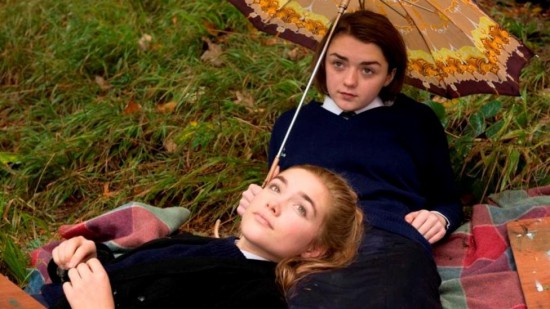
Writer and director Carol Morley presents a coming-of-age story about teenagers in an all-girls school but one that avoids the expected scenarios of the modern teen movie genre. Setting her tale in the late 1960s, it relies on old-fashioned storytelling methods that are suitably accompanied by beautifully bewitching imagery. The plot centres around Lydia Lamb, a mixed-up girl from a broken home played by Game of Thrones’ starlet Maisie Williams. Always in the shadow of her uber-confident best friend Abbie (Florence Pugh), she yearns to discover herself and where her place is within the disciplined, cliquey society she finds herself in. At home, she is teased by her peculiar older brother Kenneth (Joe Cole) and neglected by her agoraphobic mother Eileen (Maxine Peake), which result in a bout of odd behaviour which strangely begins to spread throughout her classmates.
The western setting has provided a backdrop for all sorts of films, but the traditional revenge story is undoubtedly one that is suited to the style and can utilise the good guy/bad guy stereotypes that are synonymous with the cinematic history of the genre. Adding a Scandinavian flavour to the formula in ‘The Salvation’ is Danish filmmaker Kristian Levring who was one of the pioneers behind the avant-garde movement Dogme 95. The leading man, known only as Jon, is played by fellow countryman Mads Mikkelsen, and his survival chances are left slim to none following events that cruelly take his family away from him. His initial act of vengeance starts an almighty feud with land baron Delarue (Jeffrey Dean Morgan), his henchman The Corsican (Eric Cantona) and the rest of the local community. With his brother Peter (Mikael Persbrandt) his only ally, can he overturn his odds and leave town alive?