Founded by Edinburgh-based screenwriter and director Neil Rolland, Write Shoot Cut offers a platform to up and coming filmmakers to discover their talent and also showcases their work at local cinemas. Whatever aspect of the creative process you are interested in whether it is writing, directing, editing or producing, the opportunity is there to get involved, learn new skills and most importantly have fun. I’ve been fortunate enough to attend events held by the Write Shoot Cut team and have taken the opportunity to network with those involved. The enthusiasm behind the projects is inspiring. As part of new movement Tartan Features which encourages and celebrates micro-budget feature filmmaking, Neil Rolland’s debut titled ‘Take it Back and Start All Over’ screened at Edinburgh Filmhouse ahead of short film ‘James and the Urn’ by Louis Clark.
James and the Urn
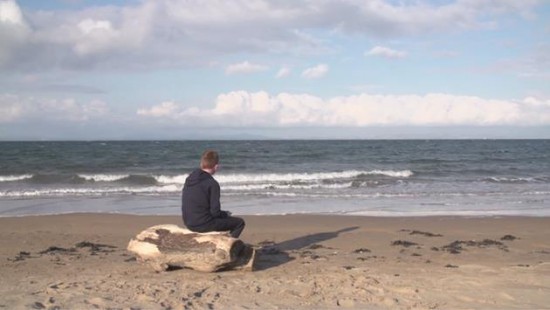
Originally written as part of a ‘death trilogy’, themes of loss and mourning are ever-present in Louis Clark’s short ‘James and the Urn’. The dialogue light narrative follows the eponymous James (Ryan Gerrard) who finds his grandmother dead in her home. The grief-stricken boy struggles to cope as life moves on around him, so takes action in order to come to terms with death. An impressive mix of tight camera work, efficient editing and unnerving sound design help convey an atmosphere of melancholy and loneliness as James blocks out the world around him.
Take it Back and Start All Over
This ambitious film was shot over just five days on a budget of £1000 and is a fantastic example of using the resources available to you to the very best effect. The plot tracks the turbulent relationship of Jennie (Kerri Clarence) and Brian (Neil Rolland) as they struggle with the domesticities of marriage following the birth of their daughter. The message at the film’s core is one that most of us can relate to whereby the humdrum routine of day-to-day life continually gets in the way of the desire to follow your dreams. For Jennie, her dream is music and she yearns to rediscover her self as a singer-songwriter, despite the lack of support from her selfish husband. The strain ultimately takes its toll on the couple and the acting out of their struggles is always very natural and often moving, helped by the fact that Jennie and their daughter Evie are played by Neil’s actual wife and daughter. This allows for a Blue Valentine-esque flashback which really works, contrasting wedded bliss with marital misery. The supporting cast, which includes Kyle Titterton and Game of Throne’s star Kate Dickie are equally excellent in their roles. ‘Take it Back and Start All Over’ is very much a personal project for Neil Rolland who was writer, director, actor, editor, producer as well as writing all of the original songs used in the film, so to take all that on board and have a great film at the end of it all is an astounding achievement.
The Second World War has provided a platform for a lot of cinema, exploring many different facets and angles of battle through various styles. In its subject matter, focussing its attention on an American tank crew heading into Nazi Germany in the spring of 1945, David Ayer’s action drama ‘Fury’ covers ground that is, to my knowledge, relatively untouched. Brad Pitt stars as Don ‘Wardaddy’ Collier, the fearless leader of the pack and is joined by a solid cast including Shia LaBeouf and Michael Peña. We join them in their tin can of terror just as they’ve lost a man and picked up a replacement in the sorely inexperienced Norman Ellison (Logan Lerman), a trained typist who has been in the army for just eight weeks. As he is thrust into conflict along with four bruised, war-torn figures, the differing perspectives of war are observed and the dynamics of the group are severely put to the test against all odds.
The film is just as much about five men living through their shared and personal struggles as it is about the canvas of war that surrounds them. Outside the tank, limbless bodies lay in their hundreds on vast battleground illustrating an achievement in Roman Vasyanov’s cinematography and inside, it is just as scary, due to the intensely claustrophobic atmosphere. The combat scenes which, apart from wildly bright bullet trails that look would look more at home in a sci-fi movie, are fairly run-of-the-mill and the strength should lie in the solidarity between the five soldiers, built up through their emotional journey. However, I felt the characters, despite their likeable ingredients, lacked the necessary depth to achieve an authentic sense of togetherness. By the end, we should be completely invested in them but instead, due to the absence of emotioneering, we have an isolated squad of stereotypes. The narrative treads the line aimlessly between brutal anti-war elements and glamorisation through camaraderie but gets lost somewhere in between.
‘Ideals are peaceful, history is violent’ is just one chunk of cheddar in Ayer’s script full of cheesy one-liners. In one quite cringeworthy sequence, each inhabitant of the Fury tank in turn shout out ‘the best job I ever had’. It attempts to accomplish the same all-for-one, one-for-all mentality that Band of Brothers excelled at but it is hard to get there in just over two hours. Brad Pitt is well cast and his usual undeniable screen presence is suited to the role. He looks the part with a razor-sharp cut and scarred physique, and is probably enjoying himself way too much, though from Tarantino’s unorthodox WWII picture ‘Inglourious Basterds’ we know how much he loves killing Nazis. Lerman also impresses with a great performance that transforms a terrified office boy into a Kraut-killing machine. A brief encounter with a young German girl is powerful and provides a short but pivotal turn in his rather rushed transition from boy to man.
The story trudges through unforgiving mud and turmoil up until an entertaining and suspenseful finale that doesn’t quite make up for the confused direction which mars the success as a whole. The ambition to make the film both grittily realistic and heroically valiant, as well as implementing aspects of religious symbolism is admirable but overstretched, and the one-dimensional set-up results in a more sensationalised outcome than the potential of the premise deserves. While the 76mm ‘Fury’ tank gun fires wide of the target, there are more World War II stories to be told on-screen in ‘The Imitation Game’ and ‘Unbroken’ later in the year, meaning that this vital part of history will continue to be immortalised in cinema.
The horror genre is full of cliché and expectation, which means it is becoming increasingly tough to achieve originality when making a film of this ilk. ‘Stay away from the door’ and ‘we should stay together’ have become part of the scary movies culture but low-budget sci-fi chiller ‘Coherence’, the first feature from director James Ward Byrkit, cleverly takes the tired formula and refreshes it. The film largely takes place within an intimate house where a dinner party is being held, on the night that a comet is due to pass through our skies. When signals fail, phone screens shatter at random and the power goes out across the neighbourhood, the group of friends realise that all is not as it should be.
Shot using the shaky-cam method, a paranormal activity documentary vibe is established early on. As characters are introduced, they are zoomed in upon and interrogated with an array of extreme close ups. Abrupt cuts are used, stopping at black a little longer than we are used to. These techniques help to quickly create an unnerving atmosphere that refuses to lift throughout.
As the strange events escalate into chaos, the fracturing relationships between the supposed close-knit gang are explored, and put to the test. The reality of what we are witnessing becomes unclear as the intricacies of the narrative go into overdrive, while the director playfully subverts our preconceptions, though the score and dialogue do venture into rather familiar territory.
The film is well acted throughout, and I particularly enjoyed Nicholas Brendon’s performance as the dinner party host Mike. He injects a shot of humour that is consistently judged, without ever overstepping the mark. Because there are eight characters to meet, they can’t all be developed fully which effectively adds to the mystique. Details are revealed in small stages, so personas and problems creep into the story while they come to terms with the situation they are faced with.
‘Coherence’ is too intelligent a film to thrust the horror in the face of audience and instead it allows the viewer to think through possibilities, letting our imaginations conjure up the terror as the plot twists. This represents a stunning display of low-budget film-making. The relationship turned love triangle involving central figure Emily, played by Emily Baldoni, adds another interesting dimension that distracts from the real issue at hand occasionally. A hand written message is stuck on the door of the house about halfway through which starts ‘Guys, I don’t want this to freak you out…’ I am afraid it is far too late for that.
Continuing his staggering run of making at least one film every year since the early eighties, Woody Allen writes and directs ‘Magic in the Moonlight’. In recent times, his work has indulged in the cultures of glamorous European cities such as Barcelona, Paris and Rome, while his new project lands in the French Riviera. Colin Firth stars as respected illusionist Wei Ling Soo who lifts his guise when he takes up the challenge to expose so-called clairvoyant Sophie (Emma Stone) as nothing more than a fraudster. Will he prove successful in catching her out, or will he succumb to her charms and fall under her spell? Falling short of his finer efforts, the safe plotting and dialogue mean that this one can be filed firmly under pleasant rather than pulsating.
As always with Woody’s pictures, his interests and personality are injected into the bloodstream of his stories. Set during the roaring twenties, the score is peppered with bopping jazz tunes and the trademark pessimistic outlook on life is taken up by Stanley Crawford, which is Wei Ling Soo’s title when he’s not cutting women in two or doing a disappearing act. His dainty adversary has the bright eyes, pale skin and strawberry locks of a porcelain doll and when they meet, the narrative whisks us off in a convertible to an almost idyllic existence where time and reality appear to stand still. Sadly, the script lacks sharpness and intelligence and Stanley lacks likeability, his smugness outweighing any redeeming feature he may have.
Firth is the latest in a line of actors who’ve played a slightly altered version of Woody Allen now that he is a little long in the tooth for the romantic lead, though I suspect he isn’t as well suited to the improvised comedic style as copycats like Owen Wilson or Jesse Eisenberg were. The thirty plus age difference between him and Stone also distorts any connection that may have ignited between them. The sizeable gap has been a recurring theme in his career both on screen and off as middle aged intellectuals seek passion and adventure from attractive, quirky women. Emma Stone fits the bill perfectly for this and is definitely very watchable, appearing to be privy to the methods of the director. Set to be Woody’s next muse, she is already due to star in his next feature where she may be treated to the more involved, engaging material he is known for.
‘Magic in the Moonlight’ has its moments, and presents its location gloriously, but the results beyond the veil are less than enchanting. The working relationship of Allen and Stone shows promising signs which can hopefully come to fruition in time for their upcoming collaboration. The beauty of his relentless workhorse attitude of churning out screenplays so regularly on his trusty typewriter is that although his trip to trickery hasn’t left audiences in awe, we know that there is always something else up his sleeve.
In the film industry, when you make it, you generally go to Hollywood, and the famous hills have become synonymous with the silver screen stars. With fame and fortunes comes power which can bring out the very worst in those who absorb themselves in the glamorous entertainment business. Swinging a brutal bat at this world and those who inhabit it with a satirical study is daring director David Cronenberg. With a powerful cast including Julianne Moore, Robert Pattinson and Mia Wasikowska, ‘Maps to the Stars’ is a shocking piece of cinema that sinks its teeth into celeb culture and refuses to let go.
This jagged filmmaking takes the darkness of Bret Easton Ellis’ brat attack Less Than Zero into the 21st century in a way that Coppola’s Bling Ring couldn’t, every scene coated in a thick artificial gloss along with Bruce Wagner’s biting script that rips into the fragility of stardom. Failing actress Havana Segrand (Moore) represents the has-beens of Hollywood as she yearns for the opportunity to play her iconic dead mother on-screen, in a desperate attempt to use her family name to her benefit. A mess of a human being, her crazed lifestyle is disturbing but vital. She hires young Agatha Weiss (Wasikowska) as her personal assistant, a girl who has been quite literally scarred by her showbiz upbringing, with serious burns on her face, neck and arms. The other key player is Agatha’s brother Benjie (Evan Bird), a Bieber-esque rich kid whose moral compass is non-existent due to the material world he has been raised in. These horribly fascinating characters cross paths in an increasingly interesting narrative that joins dots into a warped image of celebrity.
There is very little innocence amongst the tortured souls portrayed, perhaps only Wasikowska’s character showing slight signs of having principles despite her unpredictably dangerous tendencies. She gives a note-perfect performance and every twisted layer of it is impactful. Equally as impressive is Julianne Moore as we’ve never seen her before. She is maniacal, lost in a bubble of Freudian trauma. Slightly underused is Robert Pattinson, who plays a wannabe screenwriter who chauffeurs the wealthy around in a stretch limousine. He is subdued but quietly effective, befriending Agatha and talking passionately about their aspirations. The supporting cast is made up of John Cusack and Olivia Williams who play Agatha and Benjie’s controlling parents, so absorbed in their glamorous careers that they’re more concerned with their tabloid reputations than their children or each other.
This is the first film of Canadian filmmaker’s that has been made in America, and down to the subject matter it couldn’t have really been filmed anywhere else. Cronenberg is a vicious vulture, preying on pop culture with oily streaks of jet-black humour. I imagine that after this deadly assault, it’ll be a while before he thinks about spreading his wings in Hollywood again, if ever. ‘Maps to the Stars’ can be a difficult watch, but it is engrossing and involving, shining the unflattering satirical spotlight directly above the unglamorous, turning the so-called American Dream into a self-obsessed nightmare.
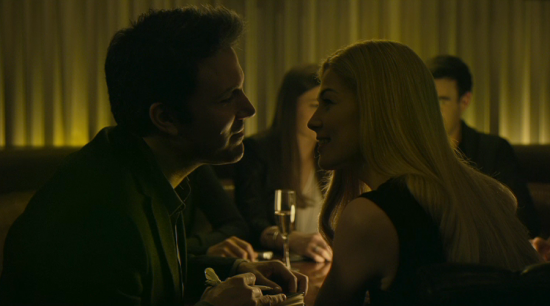
When best-selling novels are adapted for the big screen, it is fair to say that they are not always well received. Spending less time with the characters can affect how much investment and interest you have in them and sections can be added or taken away to aid the transition. It is important though that the essence of the story is maintained and having Gone Girl’s author Gillian Flynn on screenwriting duty for director David Fincher’s cinematic take on her mystery thriller certainly gives it authenticity. Ben Affleck and Rosamund Pike star as the dysfunctional couple Nick and Amy Dunne who appear to have the perfect marriage. On their fifth wedding anniversary, Nick finds that there has been a disturbance at their home and his wife is nowhere to be seen. The search for Amy quickly escalates into a media circus and the finger of blame soon pivots to her doting husband.
It is tricky to discuss the plot in any real depth without giving anything away but the twisted narrative is definitely what makes it so enjoyable. Those that have read the book beforehand may feel it is less impactful because of this. The clever unreliable narrator technique is nicely implemented with the use of voiceover, and the tense score really adds weight to how perceptions are played with throughout. Fincher is no stranger to controversial subject matter and his style is a good match for the material. He earns the certification of the film with the darkness he is associated with. The complexity of the non-linear delivery is dealt with incredibly effectively as Nick and Amy’s relationship is picked apart through flashbacks. It is bold and intelligent and has dashes of spiky humour, despite dabbling into cliché now and then, particularly with the good cop bad cop detectives on the case.
Affleck and Pike more than do their bit to illustrate the highs and lows of married life. The former is charismatic yet brooding, and latter is everything you would want from a leading lady. They both appear so polished in what seems like an idyllic marriage from the outside looking in, yet have more sides to them than a dodecahedron. I would go as far to say that this is my favourite Ben Affleck performance and Pike is equally as impressive. As the plot thickens, key figures are introduced such as fast talking attorney Tanner Bolt (Tyler Perry) and Amy’s ex-boyfriend Desi (Neil Patrick Harris). Both are fresh ingredients to the flavoursome developments, offering intriguing angles and bringing out additional attributes of Nick and Amy. Carrie Coon is also very good as Nick’s twin sister and confidant.
A solid example of when a book to film jump really works, ‘Gone Girl’ excellently showcases how writer and director can collaborate to good effect and this will go down as one of David Fincher’s strong ones alongside Fight Club and Seven. Boasting a track record for sophisticated visuals this is noticeably less stylised than his norm, focussing directly on the substance. The muted colours make up the ideal canvas for this jolting psychological drama that really digs deep into the subject of marital happiness…or lack of it.
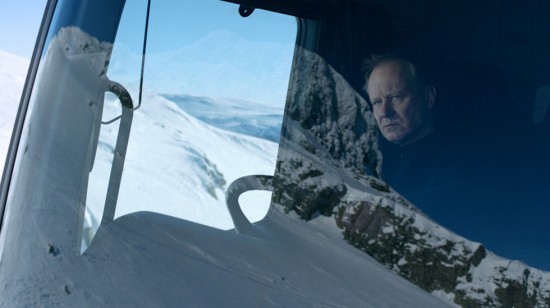
It is a common occurrence in film for directors to go back to the same actor again and again if a fruitful working relationship is formed. Hans Petter Moland’s go-to guy is the acclaimed Swedish star Stellan Skarsgård and the Norwegian black comedy thriller ‘In Order of Disappearance’ marks their fourth collaboration. In the desolate mountains of Norway, Skarsgard stars as snow plough driver Nils Dickman; a well regarded decent citizen who is pushed to his limits following the murder of his son. The Nordic fjords and landscapes provide a breathtaking setting for a story that achieves a satisfying blend of violence and humour as a father hunts down justice, spilling rich red blood upon thick white snow.
The craft and creativity of Moland’s vision enhances the classic vengeance setup as he applies an inventive flair. The script is sharp, saying something about the current state of society in Norway, or in Europe as a whole, as well as including subtle jokes and culture references. The many deaths provide great physical humour as Nils mercilessly takes out members of the Oslo underworld The victims in the film, mostly undeserving of any sympathy whatsoever, have their deaths brilliantly noted by a still black frame with the departed’s name underneath their applicable religious symbol, marking each untimely demise with comic effect. At the heart of the film though, behind the stylish coating, is a very solid character study. Skarsgard gives a stellar performance depicting a man whose contentment with life is cruelly decimated.
The eccentric supporting characters enrich the plot, as a drug war ensues around Nils between the Oslo gang and a group of Serbians. Before long snow isn’t the only white substance on screen in abundance. The pony-tailed crime boss known as The Count, played by Pål Sverre Hagen, is an absurdly entertaining villain. Thinking the world owes him a favour, he whines and moans when things don’t go his way, and attends shady meetings armed with a revolver and a flat white. Veteran Swiss actor Bruno Ganz also appears as the amusing Serb leader Papa. Like an Eastern European Don Vito, his delivery his hoarse and his actions are deadly.
‘In Order of Disappearance’ is a visually stunning cinematic piece of work that refuses to be compartmentalised as it mixes genres comfortably and with glittering results. It works as both comedy and thriller, and the acoustic score even gives Western elements which is evident again in a gunfight finish. Scandinavian cinema continues to impress hugely and with the success the film has enjoyed on the festival circuit set to result in a nationwide release, it would be criminal to miss it.
Click here for my interview with director Hans Petter Moland
At the Edinburgh International Film Festival, I saw Hans Petter Moland’s new film and was lucky enough to get the opportunity to ask him some questions. The Norwegian revenge thriller stars Stellan Skarsgård who is best known in the UK for his roles in films such as Good Will Hunting, The Girl with the Dragon Tattoo and The Avengers. ‘In Order of Disappearance’ is released on 12th September 2014.
You are known for your collaborations with Swedish actor Stellan Skarsgård. What is it about him that makes him so good to work with?
‘Well he’s probably one of the best actors in the world so it’s not terribly hard to go back to him each time. He’s a wonderful actor and I’m sure other directors who’ve worked with him would say the same. He not only gets it but he is really good at contributing to a process so he’s a lot of fun to work with.’
The zombie genre is versatile and has many branches, and these can be twisted and pulled to form canvases for many types of film. Whether it’s horror, comedy or action, the undead can find their place. A popular slant of late is the zom-rom-com, which is where Jeff Baena’s debut feature ‘Life After Beth’ can sit comfortably. The eponymous Beth is played by US comedy actress Aubrey Plaza and the plot surrounds her death and the grief caused by it, both to her family and doting boyfriend Zach (Dane DeHaan), whose mourning is interrupted by her unexpected return. This modern take is lifted by some excellent performances, and is written and directed with care, focussing in on an amusingly doomed relationship as Zach now not only loves Beth, but is scared of her too.
Unlike other zombie movies in which victims seem to transform instantly into blood-thirsty monsters as soon as they’re infected, here our expectations are toyed with as we are presented with Beth’s slow transition from sweet girl-next door with a love for long walks to a gibbering maniacal mess. This drawn-out trajectory allows a steady establishment of setting and characters and we build a rapport with heart-broken teen Zach before his love-life takes a bizarre turn.
DeHaan and Plaza take their complicated roles in their stride, the former playing ‘the straight guy’ note perfect as the latter goes completely bonkers. Not known for humour, Dane DeHaan continues to impress and is surely set to become one of the most in-demand names in the industry. Plaza brings a consistent aura of unpredictability to her performance which is forever fascinating. The supporting cast provide a richness to the piece, in particular comedy veterans John C. Reilly and Cheryl Hines who are the protective parents of the piece, have the funniest lines of the lot.
In its progression, Baena bites off more than he chew so to speak, as when the proceedings inevitably descend into chaos, the originality begins to fade. The physical comedy used as the story develops does result in one or two big laughs but the indie spark fizzles out as the ridiculous verges on being a little too silly. ‘Life After Beth’ has a unique edginess in its field, and while the complexities of the characters are charming and interesting, overall it lacked the defibrillation required to really come to life.
Off the back of the release of ‘American Sniper’, Clint Eastwood’s patriotic biopic of the US military’s deadliest shooter Chris Kyle, I run down five of the best ‘American _______’ pictures.
5. American Psycho
Who can forget Christian Bale’s crazed performance as investment banker Patrick Bateman? Based on Bret Easton Ellis’ book of the same name, ‘American Psycho’ is a bloody good film.
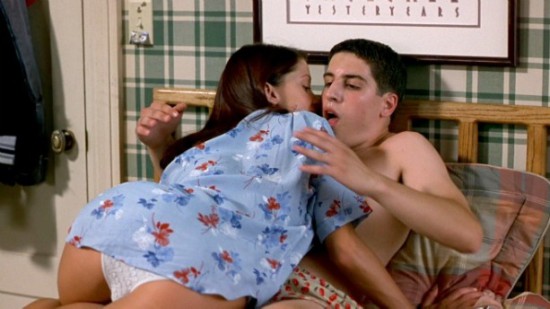
4. American Pie
Often, the original is best and this definitely applies to teen comedy franchise ‘American Pie’. The first film saw Jim and his friends make a pact to all lose their virginity on prom night, leading to hilarious cringe-worthy incidents of humiliation. After the initial trilogy, the embarrassment continued with poorly received spin-offs.
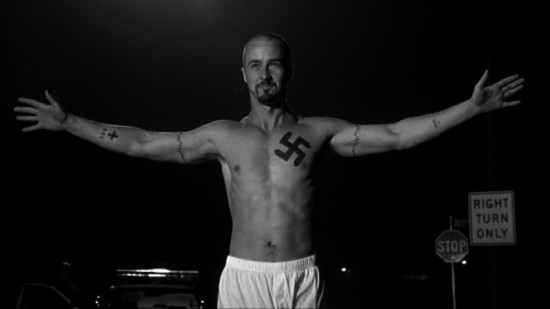
3. American History X
In ‘American History X’, Edward Norton stars as neo-Nazi extremist Derek Vinyard. After serving time in prison for manslaughter, he and his views are released to influence his younger brother and those around him. Remembered for its brutality and non-linear narrative, it is a modern masterpiece that came 311th in Empire’s list of the Greatest Movies of All Time.
2. American Gangster
Ridley Scott has been a little bit hit and miss in the past decade or so but his crime epic ‘American Gangster’ was undoubtedly a high point. With colossal performances from Denzel Washington and Russell Crowe, the story of drug-smuggling Frank Lucas was exhilarating from start to finish.
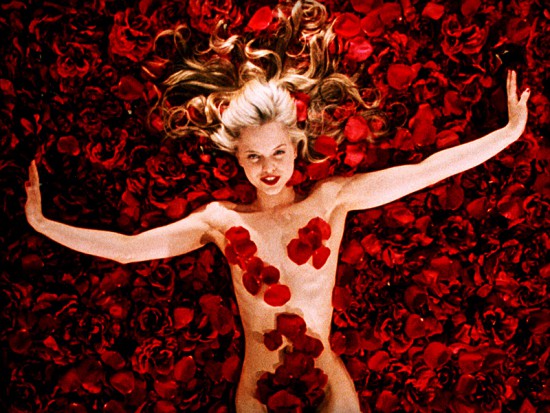
1. American Beauty
Taking the top spot is the iconic ‘American Beauty’ directed by Sam Mendes. The plot follows the midlife crisis of office worker Lester Burnham, played brilliantly by Kevin Spacey, who falls in love with his teenage daughter’s best friend. If his wife finds out, it’ll be no bed of roses…