

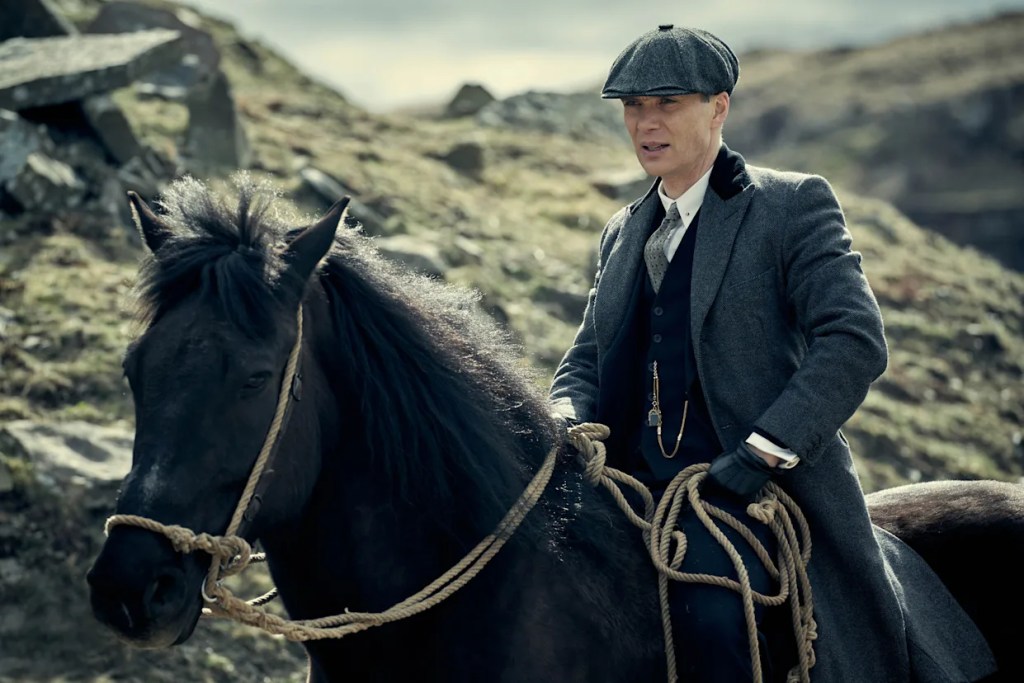
After thirteen years, six series, and countless razor-sharp haircuts, creator and screenwriter Steven Knight brings his iconic Birmingham gangsters to the big screen. Directed by Tom Hopper who worked on some of its early television episodes, Peaky Blinders: The Immortal Man takes place during World War II and sees the great Tommy Shelby (Cillian Murphy) living in self-imposed exile, mourning the loss of loved ones and writing a novel.
In the city, his son Duke (Barry Keoghan) has taken the reins of the family business and is approached for a lucrative job by fascist politician John Beckett (Tim Roth) who is allied with Nazi Germany. Following desperate pleas from his sister Ada (Sophie Rundle) and the mysterious Kaulo (Rebecca Ferguson), Tommy is forced to return to the life he’d left behind.
Opening with a throbbing rock bassline from its killer soundtrack, no time is wasted in setting the scene with the new wave of criminals in the West Midlands. Smartly showing two sides of the coin with Duke’s raucous uprising running alongside his father’s quiet, reflective despair, we see history repeating itself and there are shades of Scorsese’s epic The Irishman in how Knight’s script explores the impact of Tommy’s grief. His once lavish stately home is now a barren haunted house, full of ghosts from his past. As the story develops, there’s fan service at play as we ride a stylish victory lap for the show full of swagger, violence, and cool slow-motion sequences. True to form, an intricate plan is hatched to foil a new enemy which leads to an action-packed, thrilling finale.
Returning to his most compelling character with salt n’ pepper hair and a horse carriage worth of emotional baggage, Cillian Murphy delivers another excellent anti-hero performance. With so many of his co-stars missing from this outing, he forges a volatile paternal relationship with Barry Keoghan as Duke, his illegitimate offspring recast from the sixth series. Keoghan impressively represents the next generation of wilder, more reckless Blinders – no PTSD but major Daddy issues and a decent Brummy brogue. Rebecca Ferguson brilliantly keeps the show’s intriguing Romani spirituality alive in a way in which honours the late Helen McCrory’s powerhouse turn as Polly Gray.
The plot-points of this chapter might be slightly stripped back in scale in the context of WWII, but in Peaky Blinders: The Immortal Man, the layered character study of Tommy Shelby feels truly cinematic. It’s a must-see for even casual fans of the beloved programme, dothing the flat cap in a tailor-made conclusion that feels both intimate and powerful.


 Cinema Perspective