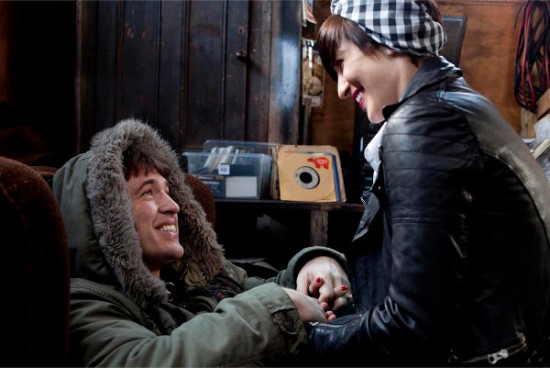
Stemming from a hit YouTube series, ‘Svengali’ tells the story of music fanatic Dixie (Jonny Owen) as he moves from a small-town in South Wales with his girlfriend Shell (Vicky McClure) to follow his dream of being a band manager in the big city. He finds the next big thing in the epically named volatile four piece The Premature Congratulations, or The Prems for short who he takes from grotty pub gigs to the listings in NME. Jonny Owen also writes and produces but it is John Hardwick who directs, his Meadows-esque shoestring budget style coming across to establish the lively London setting perfectly, elevated by a great British soundtrack.
When speaking about the tracks used, Owen talks about the origins of rock and roll and how he wanted each decade to be represented since it began and this works, showcasing the evolution straight through to the latest flavours of the month, Jake Bugg and Miles Kane. There is a clear passion and vision behind this piece, and with all the Fred Perry polo shirts, parkas and Doc Martens on show, the Mod scene is captured well. There is a hilarious moment where Dixie debates with a Camden record shop owner Don (Martin Freeman) over Mod culture.
The biggest laughs come from the many great, well placed cameos from Freeman, Michael Smiley and Matt Berry who plays an eccentric producer who sits behind his desk in loud beach shorts and flip flops. Aside from the rock raucous, at the heart of the film is the relationship between Dixie and Shell and the financial struggle they go through to fund their dream. This plays out nicely enough, but feels a little like it has been patched together to carry the narrative along, and doesn’t go deep enough. With Vicky McClure, the acting talent is definitely there to get beneath the cracks and go dark, as she has shown in her This Is England work, but sadly this doesn’t happen.
There is a lot to like about this fun flick, and for any fan of British pop culture, it a must see. Dixie is another downtrodden underdog, fighting against the odds, so it is easy to root for him, his infectious personality and naff sense of humour making him ever likeable. I feel it glamorises the lifestyle a little in the beginning, and when things take a turn for the worse for Dixie and Shell, it doesn’t ring true, losing its sense of reality. Even if the ride isn’t as interesting as it should be, the excellent music choices are certainly more than enough to see it through.
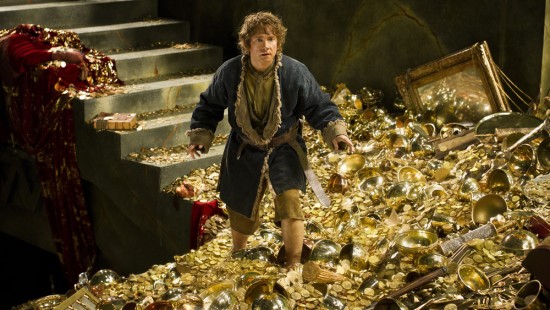
Middle-earth motion pictures are quickly becoming as synonymous with Christmas as mulled cider and bad cracker jokes, and last year was no different. Peter Jackson is back with the second instalment in his trilogy of films adapted from J.R.R Tolkien’s fantasy adventure novel. ‘The Hobbit: The Desolation of Smaug’ picks up pretty much where Bilbo Baggin’s unexpected journey left off as he, along with Gandalf the Grey and a squad of merry dwarves led by Thorin Oakenshield, continue their trek to The Lonely Mountain to find the Arkenstone gem and reclaim the Kingdom of Erebor. On their travels, they encounter giant man-eating spiders, the Elves of Mirkwood, a horde of vicious orcs and of course, Smaug, the dragon. But now that Bilbo is in possession of the One Ring, he is an ever-changing hobbit and his character is severely tested, adding an extra dimension compared to the first film which was mainly an introduction exercise for the host of new characters.
The first instalment of the trilogy came under critical fire for its pacing issues and the lengthy pit stops used halting the proceedings to pad out the typically long running time associated with Peter Jackson’s works. This time around, there is a much more action packed start after and during the big set pieces, the high 48fps frame rate is handled more assuredly but it still unfortunately feels below average in terms of the 3D usage. Considering filmmakers such as Ang Lee and Alfonso Cuaron have made technical leaps forward in this field, the 3D effects here are unremarkable and distracting, failing to add an awful lot to the film.
In saying that, the visuals are mostly spectacular, particularly in one busy sequence when the dwarves are sent hurtling downstream whilst packed in wooden wine barrels as they flee from the elves in a wonderfully entertaining escapade. Talking of elves, we see Jackson employing some creative license when it comes to the pointy-eared clan, bringing Lord of the Ring’s favourite Legolas into the story despite the fact he wasn’t featured in the original book. Though more controversially he also initiates the feisty Tauriel, who has been plucked straight from his own imagination, and wedges in a cross-species love triangle between Tauriel, Legolas and boisterous dwarf Kili, who is the only dwarf aside from the courageous Thorin to receive further character development in this edition. The others follow suit and make up the numbers though a small group are separated from the bunch near the end which may allow for something more interesting in the final piece. The romance aspect of the storytelling feels very unnecessary and forced, completely deflecting from the origins of Tolkien’s beloved tale and serving merely as filler.
The performances are strong across the board, lifting the entertainment value somewhat, and Martin Freeman excels in developing Bilbo’s arc, becoming braver with a brooding darkness as the almighty affect of the ring takes control. He is sadly underused given that he is in the titular role but his two-hander scene with Benedict Cumberbatch’s Smaug the Magnificent is magnificent and provides a memorable showdown, Cumberbatch achieving more than you can imagine in supplying a vocal performance as the deadly antagonist. This follows on from the two-hander in ‘An Unexpected Journey’ with Gollum which was the best scene of that film as well, but with less humour and more sense of threat. Ian McKellen is suitably solid as usual, having had plenty of practice in engulfing himself in the role of Gandalf, but is also used sparingly as he meets with the Necromancer in a subplot which acts as an exciting tension builder for the third film in the series.
It is difficult to give honourable mentions to all faces of this chapter as there are so many but Bard the Bowman and the Master of Lake-town are most notably impressive additions as the plot develops, the former giving the human element that Aragorn supplied in the Lord of the Rings franchise, and I am thoroughly enjoying the way that Thorin, played brilliantly by Richard Armitage, is utilised. He is proving himself as a worthy leader of the hearty dwarves. In being the middle film of a colossal trilogy, ‘The Desolation of Smaug’ manages to find its own identity, shrugging off the issues from the opener and assuming the vital function in bridging it with the anticipated finale which will be with us this Christmas. By then, Peter Jackson’s beard may be as grey as Gandalf’s which would be apt in delivering the last in his marathon collection.
Following on from recent successes Tangled and Wreck-It Ralph, Walt Disney Animation Studios bring us ‘Frozen’, the latest in an illustrious generation spanning collection. The company’s transition to digital is represented in an impressive short which is screened before the feature titled ‘Get a Horse!’ in which Mickey and Minnie Mouse do their utmost to outwit old foe Peg-Leg Pete. This quirky, imaginative little gem serves as the perfect entrée to what is to come.
The main course is loosely based on the Hans Christian Anderson fairytale The Snow Queen and follows two sisters, Anna (Kristen Bell) and Elsa (Idina Menzel) who have a fractured relationship due to a childhood incident caused by the cryokinetic powers of the latter. As they grow up to become the princess and Queen of Arendelle respectively, they grow further apart, but when Elsa’s icy powers are unleashed again on a larger scale, Anna embarks on a mission to help her older sister overcome her burden and save Arendelle from the threat of a never-ending winter.
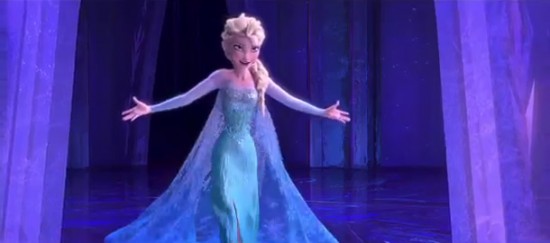
Much of the opening hour is a rather drawn out preamble to the inevitable quest to reunite the estranged siblings and despite the entertaining musical numbers, the narrative fails to really get going until the supporting characters are brought in to save the day. The turning point occurs as Elsa belts out the catchiest of songs, Let It Go, and builds herself an ice-cold fortress as well as creating the lovable snowman Olaf, who is magnificently thought out and very funny in every scene. He humorously longs for a sweltering summer, blissfully unaware of the fact he would melt. He, along with traveller Kristoff and his trusty reindeer Sven form an alliance with the ever loyal Anna and plot to rescue Elsa from herself.
The journey leads to a conclusion with a refreshing twist, remixing the expected Disney formula but with an equally satisfying result. The voice performances are solid, the characters are developed well for the most part but what will stay with you is the infectious soundtrack and overriding joyous message, installing the importance of family togetherness. In a time when effective animations are becoming fewer and far between, ‘Frozen’ is a treat which I am sure will sit fittingly alongside the classics and offers two worthy additions to the adored princess franchise. For a film so visually cold and frosty, it has the warmest of hearts.
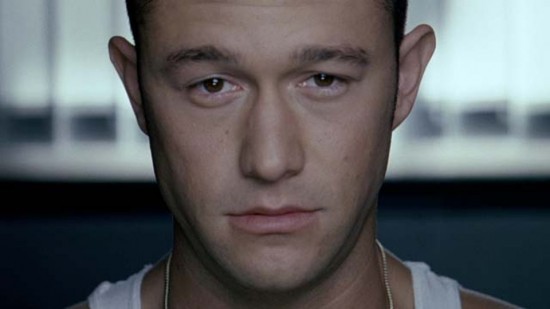
Now that the romantic comedy genre has been overdone to the point of cliché, a new wave of work has emerged which attempts to subvert the stereotypes and toy with our expectations, sometimes referred to as anti-rom-coms. Actor turned filmmaker Joseph Gordon-Levitt was a key figure in one of the pioneering movies of this sort when he starred in 500 Days of Summer, and has now had a go himself. ‘Don Jon’ takes a seedy peep into the life of a modern man, Jon Martello Jr, who is obsessed with internet pornography, and who struggles to connect with women emotionally because of this. When he meets his dream girl Barbara Sugarman (Scarlett Johansson), who has a fixation of her own in Hollywood romances, can he put his virtual fantasies to one side in return for a real relationship?
In Gordon-Levitt’s directorial debut, he certainly wears his influences on his sleeve. The quick cut quirkiness could be taken straight from the mind of Edgar Wright and is used freely and frequently to illustrate and summarise his interests, which consist mainly of masturbation, working out and attending church every Sunday to renounce his weekly sins. This provides a fun opening third, developing the macho man central character that looks like a product of watching too many Robert DeNiro films and the family dinner scenes play up the Italian-American trademarks entertainingly. The father-son rapport is particularly funny, with Tony Danza playing Martello Sr drooling over his son’s glamorous girlfriend. As the plot progresses, things get a little repetitive and when we sadly find ourselves in more familiar territory, the initial creativity is lost. A more humane personality is introduced in Esther (Julianne Moore) to interact with the one-dimensional lothario leading to a crossroads where he must re-evaluate his priorities.
It is a cheekily clever casting choice from Gordon-Levitt in picking Scarlett Johansson as his love interest. Her curves and blonde locks are impressive attributes to his superficial lead who instantly judges potential lovers by their looks scoring them out of ten with his friends. Is this the twisted representation of the modern relationship it presents itself as, or is it truer to life than he thinks? I think his narrative is, in a way, probably a more accurate social commentary than the lovey-dovey Channing Tatum weepies that Barbara is so fond of, but it is an intriguing topic to tackle nonetheless.
Aside from his writing and acting, Gordon-Levitt manages to give a charismatic performance given that his role, for the most part lacks depth, and he gets solid performances from his supporting cast. Brie Larson putting in a near muted turn as Jon’s sister who is glued to her mobile phone in every scene she is in, perhaps in a fun-poking reference to the insignificant hushed females from old Italian-American gangster movies, another nod from the director to his inspirations. ‘Don Jon’ is an ambitious first outing from a filmmaker who has an impressive knack for constructing nice visual set pieces, but lacks an original concept. The indie quirks are enough to amuse for a while, and Johansson is definitely easy on the eye, but both begin to wear thin when the potential isn’t maximised. It marks an exciting sign for things to come from a fresh thinking filmmaker who I believe that one day will create his masterpiece.
Based on an incredible true story, ‘Philomena’, directed by Stephen Frears, tracks a mother’s search for her long-lost son nearly fifty years after he was brutally taken away from her, with the help of a disgraced journalist. Judi Dench stars as Philomena Lee who was sent to the Sacred Heart convent in Roscrea after falling pregnant at a young age, and was forced to sign away parental rights. After keeping her first born a secret for decades, believing she had committed an unforgivable sin, she meets former Labour party advisor Martin Sixsmith (Steve Coogan) who is seeking a fresh new direction after very publicly losing his political position due to his controversial words being taken out of context, and they embark on an investigation which takes them further than they could ever imagine. Exploring themes of religion, forgiveness and redemption, the factual account is beautifully told, helped by a strong script and even stronger performances.
Gone are the days of western stalwarts like John Wayne and Clint Eastwood when the genre was at its busiest, bringing cowboy films to cinema screens thick and fast. In more recent times, tradition and stereotypes from that field have been replaced by more ambitious modernised takes that come few and far between but are usually worth the wait. Notable examples include Andrew Dominik’s epic The Assassination of Jesse James by the Coward Robert Ford and Tarantino’s twisted homage Django Unchained, both directors applying their own style and attitude to the familiar environment of the western film.
In steps David Lowery with whose artistic vision has been strongly compared to that of Terrence Malick, with ‘Ain’t Them Bodies Saints’, his Bonnie and Clyde-esque romantic crime drama starring Casey Affleck and Rooney Mara. Set in 1970s Texas, criminal lovers Bob Muldoon (Affleck) and Ruth Guthrie (Mara) are embroiled in a shootout with the authorities and when Ruth shoots local police officer Patrick (Ben Foster), Bob takes the blame, leaving her to raise their daughter alone while he is sentenced to life behind bars.
Although the plot focuses on a notorious outlaw on his quest to reunite with his soul mate, there is a lot less action that you would imagine. Key events such as Muldoon’s prison escape are spoken of but go unseen and instead Lowery aims his directional wand at glorious landscapes, revelling in the dusty beauty of candlelit rooms allowing the characters to develop at a brooding pace. Bob and Ruth’s bruised bond is continued through scribbled love letters accompanied by a drawling voiceover delivered convincingly by Affleck but as time wears on and news of Bob’s flee circulates, Ruth is faced with the choice of holding out for him as promised or settling down with Patrick who holds a torch for her, unbeknownst to the fact that it was she who pulled the trigger on him years before. The internal dilemma can be seen as the youthful wilds of western ideologies versus the realities of growing up and nurturing a child. Ruth is interestingly caught somewhere in the middle, raising questions of her flawed character and her relationship with Muldoon who is still living out his own misguided version of the American Dream.
Rooney Mara gives a very impressive performance as the conflicted Ruth Guthrie, continuing a fantastic run after the brilliant Side Effects earlier in the year. She manages to underplay a charismatic blend of vulnerability and unpredictability perfectly, and I would not be surprised to see her receiving a second string of nominations at the awards season. Affleck also is in fine form, fighting from under the shadow of his older brother, and carrying on his association with the modern day western after his memorable turn as the aforementioned Robert Ford. He and Mara establish an early connection effectively in the beautifully filmed opening scene and this chemistry resonates through to the closing frames holding the minimal narrative together.
The aesthetic impact outweighs the uncomplicated story which trickles through middle sections at a snail’s pace which is fine for the most part but lacking a little oomph to carry it through. In defence, this is Lowery’s biggest project to date and ultimately shows potential and perhaps if he was as inventive a screenwriter as he is a director then it would make for a sturdier, more balanced film. It is however exciting to see another interpretation of the genre which successfully dodges the deep cliché pitfalls and joins an exquisitely made collection of the neo-westerns, and though it may not be as impactful as others, it is a far cry from flogging a dead horse.
Of all the films released in 2013, perhaps none were shunned in as much controversy and adulation in equal measures. French romantic drama ‘Blue is the Warmest Colour’ has received criticism for its explicit sexual content but despite this went on to pick up the illustrious Palme d’Or award at Cannes Film Festival. It is based on a graphic novel by Julie Maroh, which is evident in its interesting use of colour, and follows teenager Adèle (Adèle Exarchopoulos) as she embarks on a journey of personal discovery and meets art student Emma (Lèa Seydoux) before coming of age. It is ambitiously shot, and the resulting outcome shares the same attributes as its protagonist; outspoken, flawed but beautiful to watch.
Highly regarded as one of the best filmmakers of his generation, Ridley Scott has brought us classics such as Alien, Blade Runner and Gladiator yet his reputation has strangely taken a beating of late. Last year, his sort-of prequel to the Alien series Prometheus failed to satisfy the loyal fans of the franchise and his latest piece, ‘The Counsellor’ has been poorly received to say the least, though I for one, thoroughly enjoyed it. It stars Michael Fassbender in the eponymous role, as a man who gets in over his head in the drug trafficking industry around the Mexico/Texas border succumbing to greed and temptation with very little persuasion. He heads an all star cast which includes Javier Bardem, Penelope Cruz, Cameron Diaz and Brad Pitt, who all revel in delivering well constructed passages from veteran novelist Cormac McCarthy’s complex screenplay as The Counsellor’s glamorous lifestyle collapses around him.
It seems that the recurring criticism is that as well written as McCarthy’s script is, it is said to struggle to translate to the big screen. In the past, his dark novels have been adapted into screenplays, with the most acclaimed example of this being No Country For Old Men, which the Coen brothers transformed into a multi-Oscar winning delight, but this is his first attempt at writing for the cinema. This results in an intelligent dialogue driven film and the A-list cast lap up every sentence, articulately conversing with one another brilliantly. I liked the flow of the dialogue, my personal favourite line belonging to The Counsellor himself as he lovingly tells his adoring fiancée Laura (Cruz) over the phone ‘life is being in bed with you, everything else is just waiting’. The on-screen spark between the two is electrifying from the explicit pre opening credits scene.
The excellent script is accompanied by wonderfully sticky cinematography, as if every frame has been dipped in a sticky gloss. The shallow almost cartoon-like characters are well suited to the plastic environment that Scott creates, where money is everything, morals mean nothing and every room of every house looks like a page ripped out of a designer catalogue. The narrative does have gaps, and virtually no sign of back-story or character arcs, but I enjoyed piecing it together whilst allowing the visuals to wash over me. The structure reminded me greatly of equally stylish Brit crime thriller Layer Cake as I drew comparisons between the unnamed leads – both opportunistic charismatic males who like to dabble in a criminal underworld believing they are too smart to suffer any consequences, and both terribly, yet predictably, underestimate the realities of their actions.
A gangster flick with such an established crew was always likely to attract an equally established cast, and the list of names does not disappoint. The utilisation of the female stars raises eyebrows as if filling places of both a feisty femme-fatale and a naive innocent lover, it’d be easy for one to assume that Penelope Cruz would take on the former and Cameron Diaz the latter, but here the stereotypes are reversed with a pleasing outcome. Cruz’s vulnerability is stunning, and Scott’s use of the extreme close up is successful in getting the most out of her natural beauty, whereas Diaz plays ‘the bitch’ in a way I could never have imagined, her cheetah obsessed diamond witch is like a younger version of Kristin Scott Thomas’ sadistic blonde matriarch in Only God Forgives. She also gives us one of the finest film moments of the year, involving a Ferrari windscreen, that is hard to forget.
Of the male members, Brad Pitt is expectedly solid, but unfortunately underused, though his part is integral to the plot and he takes centre stage in one of the films best scenes. Bardem’s portrayal perhaps has the least depth as he fills the boots of the generic kingpin, his segments are so clunky that they are vaguely reminiscent of GTA cut scenes where you are nearing the end of the game play and are introduced to the end of level boss. The least sensationalised is Fassbender who gives a powerful turn as a man losing control but he is so responsible for his actions that it makes it difficult to empathise. No matter how flawed or underdeveloped the characters are presented, they all look amazing, except Bardem, and do justice to a uniquely mesmerising script.
This is far from the expected crowd pleaser the cast and crew suggested, and will not be to everyone’s taste. McCarthy chooses to keep the audience guessing, refusing to offer up a spoon fed plot and Ridley Scott directs in a way that is pleasing to the eye, and occasionally terrifically violent, but this is well judged and he handles the graphic elements perfectly. Ultimately, he presents the film in an attractive package and lets the script most of the talking which bring out well measured performances all round and is chockfull of cleverly formed philosophical snippets commenting on the dirty Juarez layer in the which a group of cheap selfish individuals inhabit an expensive, materialistic society.
Since the teaser trailer arrived online in the summer of last year, the anticipation of sci-fi thriller ‘Gravity’ was immense, and deservedly so. Coming from Mexican director Alfonso Cuarón, who is best known for Harry Potter and the Prisoner of Azkaban and Children of Men, his latest picture sees Sandra Bullock star as Dr. Ryan Stone, a NASA medical engineer who is sent on her first space mission to service the Hubble Telescope. Accompanied by the highly experienced astronaut Lieutenant Matt Kowalski (George Clooney), their assignment is soon put into severe jeopardy when a collision on a defunct satellite sends a horde of space debris directly towards them. Revolutionising 3D with stunning camera work, and using its magnificent setting as a terrifyingly open canvas to tell an intense human survival story, this is not only unlike anything you’ll have seen this year, it is entirely different from anything you will have ever seen on the big screen, providing a refreshing cinematic experience.
‘Gravity’ will pull you in immediately and won’t let go, from the glorious opening scene which slowly swoops and dips for seventeen minutes without a cut, establishing the vastly disorientating environment, the 3D effects unrestricted by horizons and benefiting hugely from it as we, the audience, at times essentially become the camera. Avoiding the science fiction familiarities of lasers and aliens, Cuarón cleverly utilises the scenery to explore more grounded themes of parenthood, life and death, and isolation as our two Hollywood stars float around in space alone, open and honest in the silence of the surroundings. Kowalski has a care free attitude, taking enjoyment from the freedom of space and the blissful escapism from the humdrum day-to-day existence, savouring the view from above. Stone, in contrast, is in search of solace, detaching herself from the trauma she has suffered 372 miles below on earth’s surface.
As events force both Stone and Kowalski to contemplate their futures, their opposing life viewpoints are split further apart which is fascinating to watch, despite rather unimaginative dialogue. Where the aesthetics launch us to exciting new realms and future possibilities, the dialogue harks back to the past with worn out phrases like ‘I’ve got a bad feeling about this’ and ‘it’s not rocket science’ standing out as the championing rotten, yet cheekily delivered, lines in the script. Though I guess when the overall concept and visual elements are so pioneering, it doesn’t matter quite so much what the characters are saying, though I’m sure Clooney’s material as the caped crusader had more originality. In saying that, he and Sandra Bullock are both outstanding throughout, and given the fact they are the only two actors in the piece, aside from voice performances, they share the screen very well together, connecting beautifully in some of the most gripping scenes. Bullock provides a sympathetic, hard-hitting turn in the key role, handling the emotion perfectly as we relate to her personal grief whilst in shock of her sensational circumstance leading to a scene which will blow you away. She displays a commanding presence, as she floats solo for the majority of the film.
Cuarón squeezes this incredible journey into a surprisingly tight running time, allowing us to catch our breath and regain composure after just over ninety minutes, showcasing a unique and admirable technical achievement as well as telling a brilliant story of great depth and courage. This is one of the very few films I would recommend seeing in 3D, alongside only Ang Lee’s Life of Pi, and I urge you to experience it on an IMAX screen if you can. At a time when we thought we had seen it all, ‘Gravity’ has pushed the boundaries and expanded the possibilities, and in refusing to take small steps, signifies a giant leap for cinema.
With the real life events still unfolding, it may be too early to do the ‘WikiLeaks film’ but director Bill Condon has thrown caution to the wind to bring us ‘The Fifth Estate’. Based mainly on the book ‘Inside WikiLeaks: My Time with Julian Assange and the World’s Most Dangerous Website’, it is told through the perspective of Daniel Domscheit-Berg (Daniel Brühl) from when he first meets Julian Assange (Benedict Cumberbatch) at a hackers convention in 2007. He is seen to neglect his career and relationship to explore his keen interest in online activism as Assange’s right hand man but when the strong views of his mysterious mentor begin to threaten innocent lives, Berg worries he has got in too deep. Despite a solid central performance and some decent visual pieces, this thriller offers few thrills, glossing over the topic without really getting beneath the cracks.
Daniel Berg is to Assange, what Nick Carraway is to Gatsby, swooning with intrigue to get closer but constantly afraid of the consequences that it may lead to, or at least that’s the understanding we are presented with. As he puts in the hours online, leaking classified information on behalf of his master, Julian rushes around like a cross between The Doctor and the Silver-haired Surfer, swinging his laptop bag behind him wherever he goes. The plot plods along, and soon becomes boring before eventually arriving at a dead end where reality is yet to fill in the rest, but a few slickly constructed scenes showing the protagonists in a open space visual representation of the Internet make for a welcome distraction from the flailing direction. For viewers who have limited knowledge of the subject, this will provide a good grounding but those already clued up will be left a little unfulfilled.
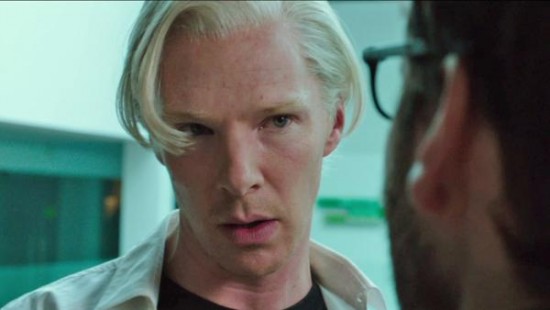
Fighting past the shoddiness is Benedict Cumberbatch who is charismatic and fun to watch at times, spouting conflicting tales about his white locks in the same manner as the Joker talks about how he got his scabby smile, and who has Assange’s voice and mannerisms down to a tee. Certainly not scared of the challenge of big roles, having previously portraying the Sherlock Holmes and Star Trek’s Khan, here he displays skill for uncanny impersonation but falls victim to a weak script. Brühl, who has also impressed this year, fails to make much of an impact, possibly due to the irritating character, and is top of the wasted talent list which includes Laura Linney as government official Sarah Shaw, and rising star Jamie Blackley, as another one of Assange’s protégées, closely behind.
Telling the story now, a mere seven years after the website was initiated, was always going to be difficult, like trying to tell a joke without the punch line, and this is evident in the filmmaking. It lacks the richness needed to fully immerse the viewer and sadly comes across like a newsflash hurling data rather than doing the fascinating story justice by telling it in entertaining fashion. Assange himself has been critical of the picture, calling it the ‘Anti-WikiLeaks film’ and a talking head to camera moment from Cumberbatch’s Julian at the end of the film preaches to us as individuals to form our own opinions of him and his organisation which somewhat contradicts and belittles the two hours of footage that precedes it. Before the release, Assange had pleaded with Cumberbatch not to go ahead and make this film. Maybe he should have listened.




 Cinema Perspective