

DVD review: Last Vegas

Of late we’ve witnessed a resurgence of beloved veterans going back to cinema, with Michael Douglas returning to work after a brush with death, action heroes such as Sly and Arnie reliving past glories with varying success, and Robert De Niro attaching himself to any film that will have him. The idea of throwing four old dogs together and sending them to Sin City seems easy and rather unoriginal, many labelling the project as the ‘OAP Hangover’ but what is truly amazing is that despite the career lengths of the stars, none of them have ever shared the screen together previously. Director John Turteltaub presents Michael Douglas, Morgan Freeman, Robert De Niro and Kevin Kline as the Flatbush Four, a group of childhood pals who reunite for a bachelor party over fifty years past their prime. Have the gang of respected actors pulled their resources for the ‘legendary’ trip the poster tagline suggests, or will they wish they had stayed at home with the pipe and slippers?
Despite the plot following the expected path of booze, gambling and girls, each of the characters is given a sturdy back-story. The individual arcs lead them into the initial meeting at the airport and intertwine to find a sentimental conclusion. Sam (Kline) is in a marriage which has lost its spark, Archie (Freeman) wants to escape the overbearing care of his son after a mild stroke, Billy (Douglas) is the stag refusing to give in to old age, and Paddy (De Niro) is the most reluctant of the clan to go, still in mourning after the passing of his wife. These deeper, yet still typical, aspects of the story at least give the actors something to get their false teeth into amongst the x-rated ice sculptures and wet t-shirt contests.
The ‘getting old’ narrative offers consistent jokes and witty one liners in the first half of the film, and the mock mafia skit they rustle up is a highlight. Once the Scotch sets in midway, events often take a turn towards the ridiculous yet the experienced cast somehow manage to get away with it. Its clear that they’ve had a lot of fun making it and the chemistry between the friends work, and although none of them really stand out alone, they all manage to hold their own. I could have benefited from one or two more scenes with all four characters together because the camaraderie was so entertaining. Perhaps a lengthier section with them sitting around a casino table reminiscing over times gone by could have been nice? Instead the dialogue was kept rather lightweight and the party scenes were a little too heavy, more reminiscent of geriatric Spring Breakers than the aforementioned Hangover. A few frames tread the line of slightly uneasy viewing as the pensioners grow old disgracefully, ogling at the bikini clad youngsters.
‘Last Vegas’ is far from the disaster that many thought it would be, and surprisingly has more beneath the surface than the first glance would give it credit for. A tender observation of men reaching the autumn of their lives, offering up one or two touching moments as well as the cheap laughs. In the hands of lesser talent, the outcome could have been so much different but the all-star cast manage to add just enough class to see it through. A term that gets bandied around which I usually tend to avoid is popcorn movie, but here it feels very relevant, serving as a welcome injection of light relief during the weighty awards season.
See the trailer:
DVD review: Dallas Buyers Club
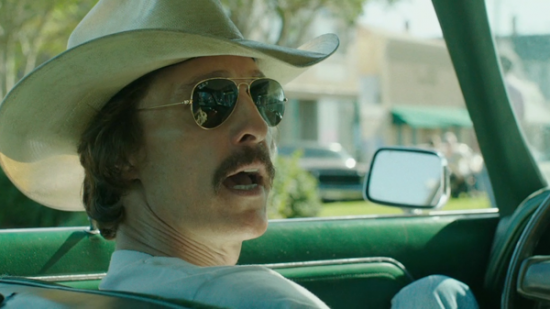
The incredible true story of rodeo cowboy Ron Woodroof’s battle with HIV and with the Food and Drug Administration (FDA) is one that deserves to be told on the big screen. After a few false starts and years of effort and determination, director Jean Marc Vallée has brought the project to fruition. Matthew McConaughey stars as Woodroof, continuing his remarkable run of form, and gives an awe-inspiring performance. After an accident at work hospitalises Woodroof, he is told he is HIV-positive and given around thirty days to live, but he refuses to give in and accept his cruel fate. He has a thirst for life, as well as bourbon, and his survival instincts lead him to start the ‘Dallas Buyers Club’, where he smuggles drugs into the country and distributes to fellow sufferers including Rayon (Jared Leto), with whom an unlikely friendship is formed.
Never has the term ‘actor’s film’ seemed more apt, as the underlying narrative structure is rather conventional, broken down with days after diagnosis title cards, allowing us an idea of the passing of time and offering a platform for Woodroof’s character arc. Initially homophobic and misogynistic, he is a nasty piece of work but as his condition develops, his narrow-minded outlook on life expands to show courage and compassion as he fights not only for his own life but the lives of all that sign up to his money-making membership club. He recruits Rayon as his right hand woman/man, a flamboyant opportunist with an ever- worsening cocaine addiction. Both turns are transformative, and at times very touching, and are receiving justifiable critical acclaim. Their gaunt frames tug at the heartstrings of the audience, inducing tears and laughter, uniting through adversity. The pharmaceutical discussions are enjoyable, as Ron swirls through legal loopholes to keep his entrepreneurial enterprise intact but aside from the superb acting, there isn’t an awful lot to shout about.
McConaughey himself said proudly that this quickly becomes much more than the ‘McConaughey gets skinny’ film, and I suppose he is right. His portrayal is full of energy and magnetism, pushing the weight loss out of the limelight, though he did shed an amazing 38 pounds for the role. It rounds off the much publicised ‘McConaissance’ which has seen him shrugging off his flimsy rom-com rep to impress in Killer Joe, Mud, Magic Mike, and now this. He will also be at the centre of Christopher Nolan’s next picture which is set to be one of the year’s biggest talking points. Proving himself, he shows great dedication and respect for Ron Woodroof in ‘Dallas Buyers Club’, carrying the film to a very solid standard.
See the trailer:
DVD review: Inside Llewyn Davis

It is always fun to root for the underdog, and unlucky losers often find a place in movie-goers hearts. Mix this theory with the quirkiness of Joel and Ethan Coen and we have ‘Inside Llewyn Davis’; a tale of a folk singer in 1960s Greenwich Village who so nearly makes it again and again, described amusingly as being ‘like King Midas’s idiot brother’. Partly based around the memoir of Dave Van Ronk, the film captures an essence of the scene through its nondescript yet pleasant palette and melodic narrative. Oscar Isaac stars in the eponymous role and the Coen brothers write and direct with a knowing flair, scenes flowing together like tracks on an ambitious concept album creating a flawed central character who rarely makes the right choices but we’re happy to follow him wherever he goes.
As the title suggests, the story tracks the protagonist’s every move and Llewyn is, in effect, the plot. For the most part, we see him dossing in the spare rooms, cars or on the couches of the subplots, bumming cigarettes along the way. This pay-as-you-go lifestyle lends the film a disjointed structure, if you can even call it that, and like his budding career, it struggles to go anywhere. This unconventional approach to storytelling may not appeal to some but I felt it only added to its charm. One constant however, is a ginger cat in which Llewyn finds himself responsible for after accidentally locking it out of its owner’s flat without a key to let it back in. What initially appear as a passing moment gradually becomes the glue which holds the tender piece together. The cat, in a way, represents the responsibility that Llewyn does not want to face up to, unwilling to admit that his dream of making it in the industry may not become a reality. This idea of a creative soul’s expressiveness going unnoticed is universal and this theme forms a resonation with the audience, and with anyone whose efforts have fallen on deaf ears.
Casting Oscar Isaac in the titular part works well as it allows him to find a balance between his acting talent and musical prowess, passing on both counts with flying colours. He has an effortless quality in his portrayal which suits the character and his voice is mesmerising in the performance sections whether on stage at the local smoky bar or crooning awkwardly to guests at a dinner party. He is joined by Justin Timberlake and Carey Mulligan as friends and folk duo Jim and Jean, who both do well in providing one of the soundtrack highlights ‘500 Miles’. Scenes shared between Isaac and Mulligan have a great energy, their bickering arguments fuelled by wasted talent and missed opportunities are both touching and funny which is no mean feat. Coen brothers favourite John Goodman rounds off the impressive supporting cast as loudmouth jazz musician Roland Turner, an interesting yet unimportant turn which sadly serves as no more than an extended cameo appearance.
Despite the well crafted cinematography and sharp script we’ve come to expect from the Coens, the infectious music is what really gives the film an edge. Filling the gaps between his episodic moments of failure are the heartfelt tracks which provide an excellent soundtrack to his struggles, the stand out tracks being Hang Me, Oh Hang Me and Fare Thee Well. ‘Inside Llewyn Davis’ is a film full of note perfect verses without a chorus and with no suspenseful crescendo, but I could listen to it on repeat all day.
See the trailer:
DVD review: The Wolf of Wall Street
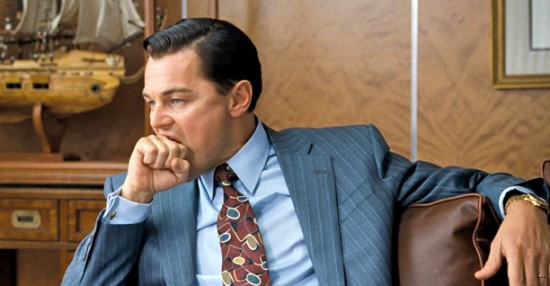
In what is the fifth project from the dream team of Martin Scorsese and his muse Leonardo DiCaprio, they present ‘The Wolf of Wall Street’; an epic retelling of the stockbroker Jordan Belfort’s memoir of the same name. It follows the rises and falls of the exuberant entrepreneur in Wall Street throughout the late eighties and early nineties as well as the highs and lows in his turbulent social life. Leo produces and stars as Belfort alongside Jonah Hill as his friend and business partner, Donnie Azoff. Scorsese is arguably better known for his past glories rather than his more recent works but here, he is back to his best. His direction is fresh and energetic and his trademark style is taken to another level, which is complimented by Terence Winter’s jet-black comedic script, and of course the astounding central performances.
We have everything you would expect from a Marty film and more, from the troubled lead to the trophy wife blond, and technically, from the use of slow motion to the pop-rock soundtrack and velvety smooth voice-over narration. Belfort’s big personality fills the screen and he guides you through his methods of corruption, breaking through the fourth wall and boasting to the audience about how much money he has, loving every minute of it. Some may protest that this glamourises his deception, taking from the poor to fund his excessive drug and alcohol habits but Scorsese rarely makes films about good honourable men, or role models, so why would this be any different now? Personally, I am more drawn to villains than heroes which is possibly why his work appeals to me so much.
When Belfort’s illegal activities catch up with him, and his home life descends into chaos, we see the creative techniques cleverly become distorted. For example, Belfort’s adversaries grow internal monologues to combat his, and in one scene, his wife openly responds to a thought in his head. It is these small but effective innovations that make this film so refreshing and exciting to watch as it is impossible to predict which trick the crafty filmmaker will pull off next.
Leo DiCaprio has a history of playing deeply conflicted men, disturbed by past traumas, and he is also no stranger to playing wealthy men. Tackling Jordan Belfort combines these qualities, like Gatsby crossed with a monster, a wolf in designer clothing, and even though the character himself may be incredibly shallow and materialistic, DiCaprio’s performance has layers upon layers and has moments which show off his talent in a whole new light. Cool on the outside, calculating on the inside, Leo captures the money-hungry persona and takes us through a whirlwind of emotion with him. His sheer charisma is extraordinary and his on-screen relationships with co-stars are great.
When next to Jonah Hill, they are both hilarious and bring the dark dialogue to fruition in flowing conversation. Leo rarely shows his capacity for comedy but bouncing off Hill’s excellent improv-chops, he is very good. Donnie, the bespectacled motor mouth with a taste for crack serves as a creditable sidekick to Jordan and despite his controversial philosophies and questionable morals, he is wickedly funny and I am a big fan of the character. Belfort’s reactions to Azoff’s outlandish comments are fantastic, as is his two-hander scene with Matthew McConaughey where the camera zones in on a young Belfort’s naive awe-struck expressions as eccentric stocks boss Mark Hanna takes him under his wing and delivers a motivational introduction into Wall Street leading to a mad chest-pumping chant which you will no doubt find yourself humming days later. In contrast to this, his chemistry with stunning newcomer Margot Robbie is intense. Scorsese has a knack for directing arguments and reminds us with a few brilliant confrontations between Belfort and fiery wife number two Naomi Lapaglia.
At a whopping three hour running time, this film is packed with money, fun, drugs, sex, jokes and more drugs and is, in a way, a gangster flick – but where the power is greed, and the guns and fedoras are exchanged for briefcases and braces. It is long without becoming overlong but the length does result in some frenetic editing which crams everything into a suitable cinema duration. I couldn’t get enough and when the original four hour cut featured on the hard copy release hits the shelves, I will be first in line to indulge in the extended version. The Wolf provides only further proof of the genius of Martin Scorsese that in unfortunately nearing the end of his filmmaking career, he can still create a masterpiece worthy of his prime.
See the trailer:
I Am Disorder
Fashion film from super-talented fashion designer/filmmaker Siam Colvine, directed by Christopher L Cook and featuring a hypnotic soundscape from Charlie Lindsay.
DVD review: 12 Years a Slave

Last year, the subject of slavery was tackled in very different ways by award winning directors Steven Spielberg and Quentin Tarantino and both lost out in the big race for the most coveted Academy Award. This year, the British artist turned filmmaker Steve McQueen presents his honest take on the topic with ’12 Years a Slave’, a gruelling adaptation of Solomon Northup’s memoir of the same name, and a strong contender to take the top prize at this year’s ceremony. Northup, portrayed exceptionally by Chiwetel Ejiofor, was a wealthy free man with a loving family and in 1841, he was kidnapped and sold into slavery. McQueen shows off his expertise in what is only his third feature, creating something which is brutal and beautiful in equal measures, taking a more hard-hitting approach at highlighting the dark side of America’s history than those before him.
The film is episodic in its structure, as Solomon Northup, or Platt as he is renamed is shunted around from pillar to post, encountering one horrible man at a time. His collisions with these powerful men are filled with tension and help take the plot forward. It slowly develops, from one year to the next, the straight forward narrative lacking invention but reflecting the prison sentence like environment. In between these emotionally charged meetings with kidnappers, slave traders and owners, we mostly see Platt suffering in silence which carries a lot of weight, keeping his head down and hiding his background and education in order to stay under the radar but never giving up hope.
In contrast to his trauma, a young female slave is more vocal in her struggle, wailing about how much she misses her children. Her vulnerability makes her a favourite of wicked plantation owner Edwin Epps and prime target for his merciless abuse. His character, as cruel as he is, is at times garish and over-the-top whereas his wife Mary lurking in the background is far more chilling, Sarah Paulson giving an exquisite depiction of evil. Epps relationship with Patsey builds to a disturbing resolution which severely tests Solomon’s character and puts the physical horror of slavery at the forefront of the audience’s mind. The big moments are heightened by a colossal yet familiar sounding score from Hans Zimmer.
McQueen’s directorial vision is well complimented by a series of stupendous performances, with Chiwitel Ejiofor and Lupita Nyong’o as clear stand outs as Solomon and Patsey, both earning their countless nominations. Ejiofor wears the emotions of his character through the expressions on his face superbly doing great justice to the mental strength it must have taken to overcome the hardships, and Nyong’o gives a stunning turn as the long suffering victim. Michael Fassbender is also impressive as Edwin Epps, a frequent collaborator of McQueen’s having starred in both his films before this, but showing an entirely different side to his talents. Sturdy support is given from Benedict Cumberbatch, Brad Pitt and Paul Dano, all briefly but suitably fitting the bill. Dano, in particular, is very strong as John Tibeats, a man who takes unnerving pleasure in dishing out pain to his slaves. His clash with Solomon is memorable, and one of the highlights of the entire film.
’12 Years a Slave’ is uncomfortable but necessary viewing, cementing Steve McQueen as one of the most forward-thinking filmmakers in the game, and by achieving this level so early on in his career, it will be interesting to see which controversial matter he will turns his focus to next. His methods are bold and fearless, and his visual background is evident in his craftsmanship. His latest effort is his most striking work of art to date.
See the trailer:
DVD review: American Hustle
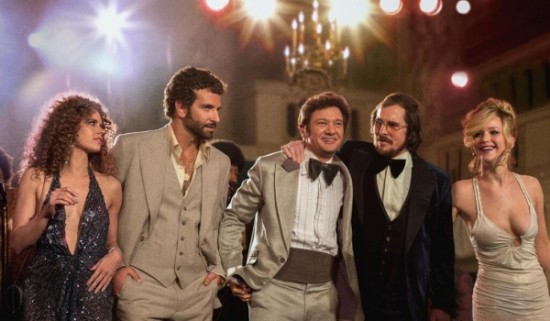
Award hungry director David O. Russell is back with a bang with well timed comedy-drama ‘American Hustle’, boasting an all-star cast and a stunning soundtrack. The plot is loosely based upon the ABSCAM operation that took place in the late 1970s…so loosely in fact that the opening title card reads ‘Some of this actually happened’, but the ins and outs of this take a backseat behind bold performances, loud characters and even louder haircuts. Christian Bale stars as cunning con-artist Irving Rosenfeld alongside his partner in crime Sydney Prosser (Amy Adams). When a wrong turn leads them into trouble, they are forced to work alongside FBI agent Richie Di Maso (Bradley Cooper), joining forces to pull off an elaborate swindle involving casinos, politicians and a fake sheikh. It mixes sharp dialogue, devilish humour and inspired production values to create a flamboyant cocktail of style, served with an ever twisting narrative. This could be the most fun you’ll have watching a film all year.
The influences behind the look and feel of the film are unquestionable, and some have been critical of the heavy usage of Scorseseisms such as slow-mo, voiceover and pop culture flavourings. There is also a strong heady whiff of Paul Thomas Anderson’s Boogie Nights, set around the same time, and also featuring powerful feisty female parts – Adams’ Prosser is a dead ringer for Julianne Moore’s Amber Waves. Personally, I don’t have a problem with the similarities as it helps captures the era effectively and to be honest, if you’re going to borrow aspects of filmmaking skills, you can’t go far wrong looking at the works of Marty and PTA. Everyone needs inspiration for a project, and Russell rejuvenates snippets of what has been done previously to produce a fresh take on the scene. Aside from the appearance, which is incredibly key to the success of this picture, Russell brings us deeply interesting characters albeit derived from real life figures of that time. They interact naturally between one another and he leaves us, the audience, not quite knowing who is going to double cross who, which provides masterful entertainment. Portraying them are the names from the top drawer of Hollywood talent, and Russell always manages to stir up big performances from his leads – this time is no different.
He has taken the stars from his recent hits and combined them to form a very impressive poster cast list. Bale and Adams both appeared in his boxing flick The Fighter whereas Cooper and woman-of-the-moment Jennifer Lawrence starred alongside each other in romantic smash Silver Linings Playbook. I can only assume Mark Wahlberg, who has also collaborated with Russell previously and took a large part in the aforementioned Boogie Nights, was thought of for the part of corrupt mayor Carmine Polito but perhaps the shooting schedule didn’t suit? He already has sequels to Ted and Transformers in production. That being said, Jeremy Renner is very good alternative, adding his own flair to the flashy family man.
Christian Bale is as good as I’ve ever seen him as the physically failing Rosenfeld. In his trademark method approach, he has put on a bulging beer gut for the part and he is fascinating to watch as he takes time in front of the mirror to adjust his hairpiece. Equally vain but a far cry from his preening pristine Pat Bateman. His character is given a developed back-story and he is a joy to behold as he fights with his morals whilst keeping up a cool exterior and as well as bouncing off those around him brilliantly. He and Cooper share a highly watchable on screen rivalry and for a change Bradley Cooper dodges the straight role and is at times hilarious, particularly during moments with his boss Stoddard Thorsen, played by acclaimed comedian Louis C.K.
The men in the male dominant cast, including supporting actors such as Boardwalk Empire hard men Shea Whigham and Jack Huston, are all great but the female leads are equally good, if not more immense. Amy Adams in effect plays a double part expertly as her smart trickster uses British alter ego to disguise her efforts, posing as Lady Edith Greensley – her accent is convincing to the point that it would be easy to get lured into her entirely fake persona forgetting it is. Clashing with Irving Rosenfeld’s love interest is his live wire missus Rosalyn, depicted by the in demand J-Law who surprisingly takes the ‘and…’ part of the credits behind the others yet she is scene stealing at every turn furthering her growing reputation after last years’ win at the Academy Awards. She gives off a sexy screen presence like never before, presents Amy Adams with some late competition in the side boob count contest, and performs a memorable rendition of Live & Let Die in her marigolds. This fantastic scene intercuts with the results of her recklessness, a slip of the tongue leaving her hubby in grave danger with the mafia led by the notorious Meyer Lansky.
‘American Hustle’ is a sophisticated epic which wears its influences proudly on its chic velvet sleeves, and is arguably the director’s best work to date. It finds a sweetly judged balance between the gloriously outlandish aesthetics and the complex scam at the centre of the script, representing a whacky adaptation of partly true events with an exciting final act. Bale is outstanding and a stand out amongst one of the best casts I’ve seen in a while with no weak link in sight, and David O. Russell continues his run of form.

See the trailer:
DVD review: We Are The Freaks

Director Justin Edgar gets nostalgic with this coming of age tale of three teenage misfits in 1980s Britain. Inspired by the London riots, ‘We Are The Freaks’ captures a sense of rebellion at the end of the Thatcher era. Jack (Jamie Blackley) has a dead end bank job but awaits news on a grant to fund a writing degree. Parsons (Mike Bailey) is a lost soul, seeking an escape from his overbearing Conservative household. Chunks (Sean Teale) is the wild one, a burden on society living off the wealth of his divorced parents. With clever quirks and camera trickery from the outset, this aims to be the antidote to the tired teen comedy flick but by wearing so many influences on its sleeve, does it really achieve this?
In the opening scenes, Jack assumes the narrator role talking directly into the camera, introducing himself and his friends. He breaks down the fourth wall in Ferris Bueller fashion, whilst simultaneously poking fun at it, offering a refreshing start. The extradiegetic fun continues brilliantly for about thirty minutes then sadly fades away only to be replaced with a conventional plot, coming close to identical to that of Greg Mottola’s Superbad. The three protagonists share similar attributes to their modern American counterparts and Michael Smiley is brought in as the hilarious Killer Colin – the irresponsible adult equivalent to the policemen who befriend McLovin, the geek position this time around filled by Parsons. Of course, each of the trio want to ‘get the girl’ leading them to a house party. Their paths then separate for much of the middle section giving each a chance to find themselves, only to regroup for a parodist reflection finale. Despite not being as original as it thinks it is, it is still highly entertaining and the performances provide charisma and energy throughout.
Blackley is excellent in the central role, and has believable chemistry with Skins lads Mike Bailey and Sean Teale. The script is fluid, boasting a lot of well timed wit, helping to create a natural dynamic friendship between the three. The young supporting cast is strong, particularly from the desirable musician Elinor with a passion for rave, played by Amber Anderson and outcast Splodger who delivers a foray of fantastic jokes late on. Smiley puts in an expert turn as the aforementioned Killer Colin, a local drug dealer who lives in a caravan and seems to consume most of his stash rather than sell it on.
The opening third is definitely something to behold, Edgar expressing exciting creativity, but as the spectatorship techniques peter out, the film unfortunately loses its edge. The self awareness does rear its head again for an intelligent closing sequence but overall there is slightly too much imitation and not quite enough innovation so although it doesn’t maximise on the potential promised by a truly great beginning, ‘We Are The Freaks’ is very enjoyable and the cinematography is inspirational, providing a wacky interpretation of youth culture of that time.


 Cinema Perspective