
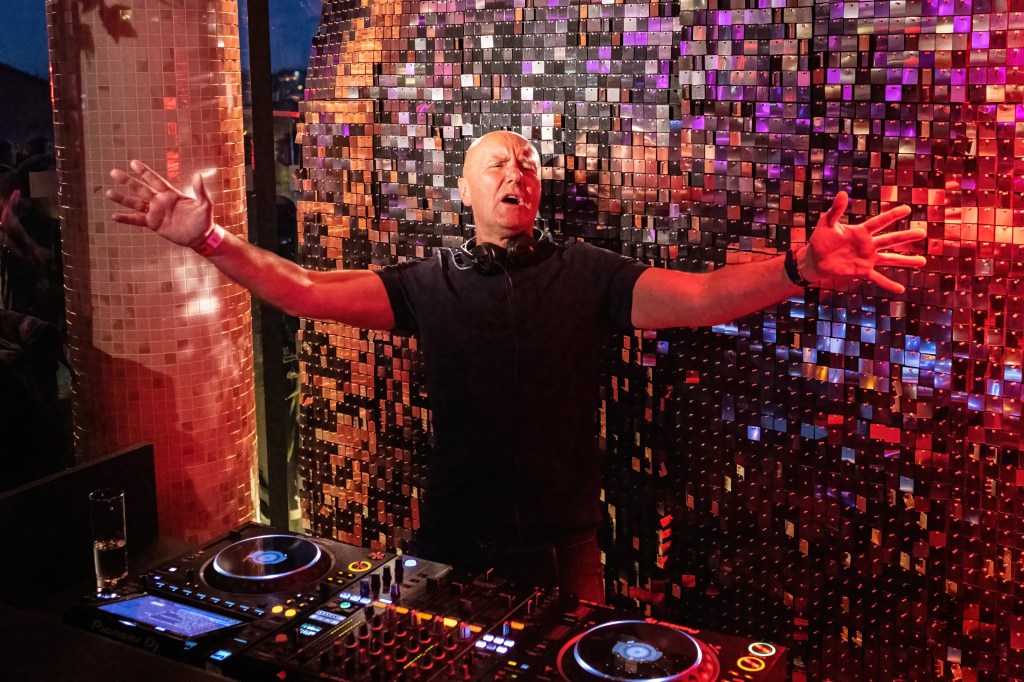
Known for his drug-fuelled novels such as Trainspotting, Filth, and Crime that depict working-class life in Scotland, novelist Irvine Welsh continues to explore fresh artistic mediums some thirty-plus years into his creative career. He has recently released concept album The Sci-fi Soul Orchestra as a musical companion piece to his latest book, Men in Love, and is always working on exciting new ideas across stage, screen, and of course literature. Giving a unique insight into his life and psyche, experimental documentary Reality Is Not Enough is written and directed by Paul Sng and uses a range of filmmaking styles to present a vivid and deeply personal portrait of the iconic writer.
Ahead of its world premiere at the 78th edition of Edinburgh International Film Festival, I was lucky enough to sit down with Sng and Welsh to discuss the film…
Paul, you’re known for your cinematic profiles on musician Poly Styrene and photographer Tish Murtha. Why did you choose Irvine Welsh for your next film?
PS: No one’s asked that question in that way but, you know, we were pals and you would think making a film about someone that you know, whose work that you’ve read, and who inspired you when you were younger would have been really intimidating. But because we knew each other, I knew this other side of him. As a friend and as a loving husband to Emma, I thought ‘that isn’t the persona the public sees’ and so we spoke about the sort of film we wanted to make. I also wanted to make something that would be cinematic; no talking heads and none of the usual tropes you get in a documentary. It wasn’t intimidating but it was a big responsibility to make a film about someone who has written so many brilliant books that have changed people’s lives.
With archive footage, excerpts from novels, clips with friends and family, and the DMT elements of the film, you’ve incorporated a lot into the film. How did you balance the different parts to make it feel so cohesive?
PS: In the planning stage, the editor of the film, Angela Slaven was involved from the very beginning. She did a brilliant job and we had a spreadsheet that we colour coded so that each section, whether it was the clips, the memories, the DMT room, the actuality, the readings, were different colours so we could see how things were structured around the themes of the film which are place, belonging, creativity, hedonism, mortality, existence, you know so you watch it with that kind of eye.
When you see Irvine maybe kicking the ball about with his friends in Muirhouse and finding out that one of the reasons he became a writer was because his distrust of authority from being arrested with his pals aged 7 or 8. You go into sections where the clips that we’re seeing from the screen adaptations tie into that, so rather than being a kind of linear story of ‘I was born here and then this happened’, it’s more about the themes that inform not just his life but a lot of people’s lives.
There’s a moment in a T2 Trainspotting scene we see where Sick Boy accuses Renton of being “a tourist in his own youth”. With documentaries, it’s often about looking back but is that challenging to do without it becoming a nostalgia fest?
IW: I tend to not be great at looking back. I don’t really have that kind of mind. It’s just that I’m so rooted in the present. I’m not really great at looking forward either. I’m rooted in the here and now. I can maybe do about a couple of days back and about a couple of weeks ahead at the very most, and that’s because I’m always working on something and I’m always immersed in something. My brain just doesn’t work in that way, so it’s a bit of a revelation to see myself in that way. To see myself going through time and time going through me as well.
It’s an incredible piece of filmmaking. It’s quite an achievement to make a writer look interesting because it’s just not an interesting medium. Paul’s taken these bits of my life and looked at how they influence what’s actually coming out of the page, and not the ones that have kind of been done to death…the drugs and all that sort of stuff. I’ve been a junkie for one year of my life and I’ve been a sort of romantic for about 60 or something. You can’t allow yourself to be defined by a very small aspect of it.
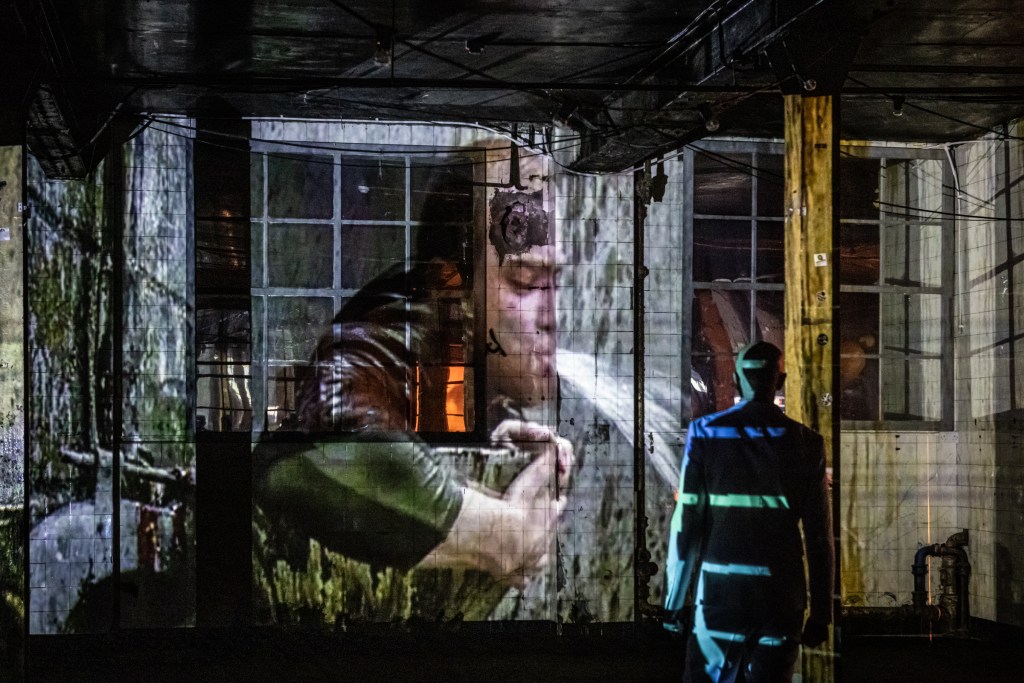
There’s a real fly-on-the-wall aspect to a lot of the film, and scenes from all over the world from Miami to Toronto to London. How did this collaboration work between you both throughout the process?
IW: It was just a matter of me really sharing the diary and saying this is where I’m going be roughly and if anything came up that was quite interesting, I’d tip Paul a nod to it, like.
PS: The one thing I wish we’d been able to get was when you went to Australia. That would’ve really have been something, but we’d have had to get out to the outback.
IW: That was just after my mother died. I went to the outback to do a Jim Morrison and find the spirits of my mother and father. I went backpacking on my own into Alice Springs but nothing happened. It was beautiful…then I went to see Guardians of the Galaxy 3 in the cinema in Perth and I burst into tears [laughs]
PS: I got upset in that too, with the raccoon story. There was another element of the film that didn’t make it in. I’d given Emma (Irvine’s wife) a camera phone and asked if she could get some candid moments. She got loads of brilliant moments but we just couldn’t find a way to sort of place them because obviously you’re in a different format and it’s a completely different tone. Maybe one day we’ll make a separate film with them.
I already know that Skagboys is Irvine’s favourite of his own novels but I was interested in which of his was your personal favourite, Paul?
PS: Glue for two reasons. One, because it’s just a fucking brilliant book and I love the expanse of it, the way it takes place over like multiple decades. And two, because when I met Irvine, he told me that when he was younger and first came to London, he was adopted by a group of West Ham fans and West Ham is my team. When I came to Edinburgh, he repaid that favour/curse and introduced me to all of his buddies that he goes to Hibs with. I’ve got a season ticket now and hung out with these guys who became friends as well and the inscription at the beginning of Glue is dedicated to them. There’s a beautiful line about sticking together when everyone was falling apart or something along those lines, and it’s a beautiful simple sentence that just encapsulates what friendship is.
One of the worst experiences in this film was having to cut a scene with three of those guys; Jimmy Lugton, Scott Bootland and George Shipton. We filmed a scene in a pub with them watching Hibs beat Hearts 1-0. It stayed in for ages and I kept getting the same note from producers and funders that the scene was a double beat with the other football scene with his oldest friends Colin and Dougie. I’d left it in for so long and then ultimately you have to cut things and I had to lose it. I felt so bad and kind of avoided talking to them for ages but then I saw them and they were lovely about it.
It’s funny that you mention the Edinburgh football rivalry. I’m a Hearts supporter and whenever something truly awful happens to a character in one of Irvine’s books, they’re quite often a Jambo…
PS: [laughs] Is that a coincidence?
IW: I get a lot of flak for that, and Dougray Scott, who is a big Hibs supporter gives me a lot of flak as well. He plays Lennox in the Crime TV series and was like, “what did you make me a Jambo for?!” because he knows bad things are going to happen to him. It’s easier to make that stuff happen to a Jambo… [laughs]
Irvine Welsh: Reality Is Not Enough had its World Premiere on Closing Night of Edinburgh International Film Festival on 20th August, and is coming to UK cinemas 26th September

 Cinema Perspective