
In recent years we’ve seen a surge in cinema that has tapped into emotional aspects of Asian-American culture and identity, with the likes of Lulu Wang’s poignant comedy The Farewell, Lee Isaac Chung’s family tale Minari, and Celine Song’s complex romance Past Lives. An arthouse entry into this niche space is Blue Sun Palace, a social-realist drama from writer and director Constance Tsang. Taking place within the Chinese community of Queen’s, New York, the story follows Didi (Haipeng Xu), Amy (Ke-Xi Wu), and Cheung (Kang-sheng Lee) as they navigate life, love, and loss.
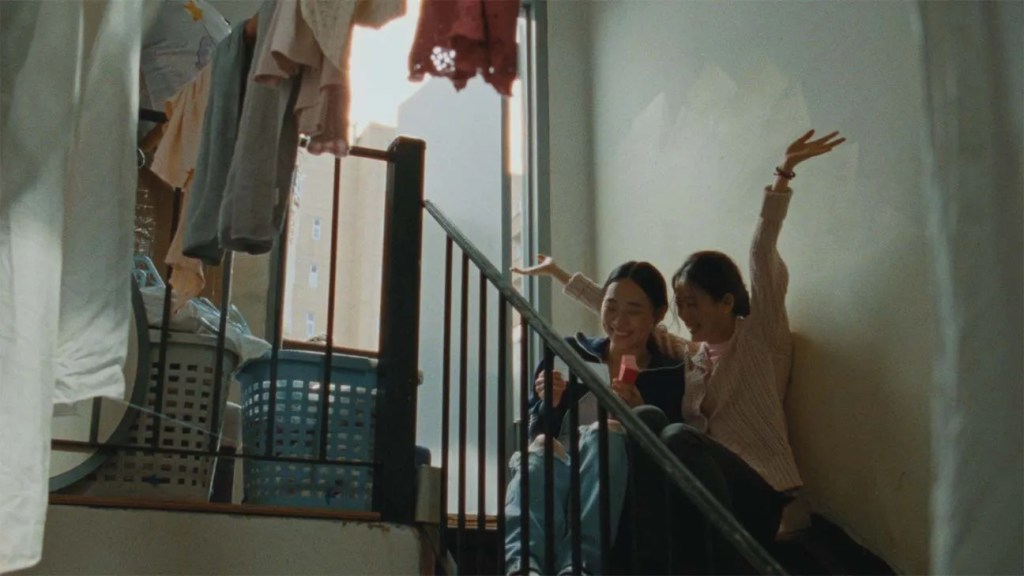
Gently paced but with neat compositions that keep us up close to the characters, Tsang crafts a slow immersion to this specific immigrant experience. The narrow camerawork has a worn-down scuzzy texture to it which reflects the limitations faced by Didi and Amy in particular, colleagues who ply their trade at a beaten-up basement massage parlour. With a ‘no sexual services’ note taped to their entrance that isn’t always strictly adhered to, there’s an unavoidable seediness to the workplace but also a comforting warmth that comes from the friendships between the staff.
After being subtly lured into a day-to-day rhythm through conversations, opening with a scene in a Chinatown diner where casual lovers chat over spicy chicken, there’s a startling moment of violence that boldly shifts the focus completely and gives the film its structure. In the events that emerge from this point, we see how tragedy and grief is folded into the existence of troubled souls that might otherwise fade anonymously into the background of the bustling neighbourhood around them.
Complimenting the engaging naturalism of the aesthetic, the main trio of actors are suitably understated. At different stages in lives that bare a similar burden, Didi and Amy’s older sister-younger sister dynamic is tenderly portrayed by Haipeng Xu and Ke-Xi Wu. This initial bond enhances the evolving emotions in the narrative’s changing themes as the plot develops and brings another layer of sadness to Kang-sheng Lee’s turn as Cheung. A flawed individual in many ways but mostly well-meaning, he becomes defined by his yearning for a meaningful connection.
Inspired by stories from within her own family, Blue Sun Palace is an intimate and deeply personal feature debut from Constance Tsang. Beautifully observed, she concentrates her lens on the ordinary within the extraordinary, a marginalised milieu explored with an affection tainted by melancholy – a slice of life picture elevated by its triptych of quietly moving central performances.


 Cinema Perspective