
Revisiting themes of complicated love, the latest film from Ira Sachs is romantic drama Passages. The plot sees narcissistic filmmaker Tomas (Franz Rogowski) begin an intense sexual relationship with schoolteacher Agathe (Adèle Exarchopoulos), much to the dismay of his husband Martin (Ben Whishaw). I was fortunate enough to sit down with the writer and director to discuss his work…
Within the central love triangle, the leading man is German, his husband is British, and his new lover is French…why did you decide Paris was the best city for this story to unfold?
I have been going to Paris since I was in my early twenties. I first lived there in 1986 when I was a student and I didn’t speak good French and didn’t have any friends. I ended up going to the movie theatres two or three times a day for a three month period and it changed my life. I just felt really connected to being in a movie theatre and also to French cinema in a way that was really intimate for me. Since then, I’ve gone back to Paris many, many times. I’ve had relationships in Paris. I’ve had breakups in Paris. I sort of feel very comfortable in that city. It was a natural fit, particularly because I’d written the film for Franz Rogowski, and it just felt like a place that he might live.
And speaking of Franz Rogowski’s character Tomas, what do you think it is about these narcissists that can allow them to draw people into their aura the way he does? It’s like he has Martin and Agathe under a spell…
Well, he’s like a Pied Piper. He’s got charm, he’s got motivation, he’s got ambition. He’s also like a physical presence which I think is very appealing to certain people. In a way he makes life for these other characters…whether he takes over their life is another question. I think the history of cinema is filled with characters like Tomas.
I loved the line towards the end where he’s told “even your face is ugly now”, almost as if his power has dissolved in some way. Can you tell me a little about this scene?
I’ll tell you two things about that. One is, the film was very inspired by the last film of Lucio Visconti called The Innocent, which I recommend. It’s a film about an aristocratic man with a mistress and a wife and he’s sort of torn between the two and he wants them both at different times and it really becomes this love triangle. There’s a lot of similarities and that line is actually lifted directly from Visconti.
The other thing that I think is interesting about that film is how the camera and the dialogue tell the audience things that are true. Only because the filmmaking supports that – Franz looks exactly the same he did as in every other scene but the line says, ‘you look ugly now’ and so suddenly the face gets transformed.
I think about the way that Hitchcock worked with Kim Novak, in Vertigo for example. Kim Novak is a very unusual looking woman but Hitchcock tells you she’s the most beautiful woman in the world…and so you believe it and I love the power of the camera to enforce an idea of a star.
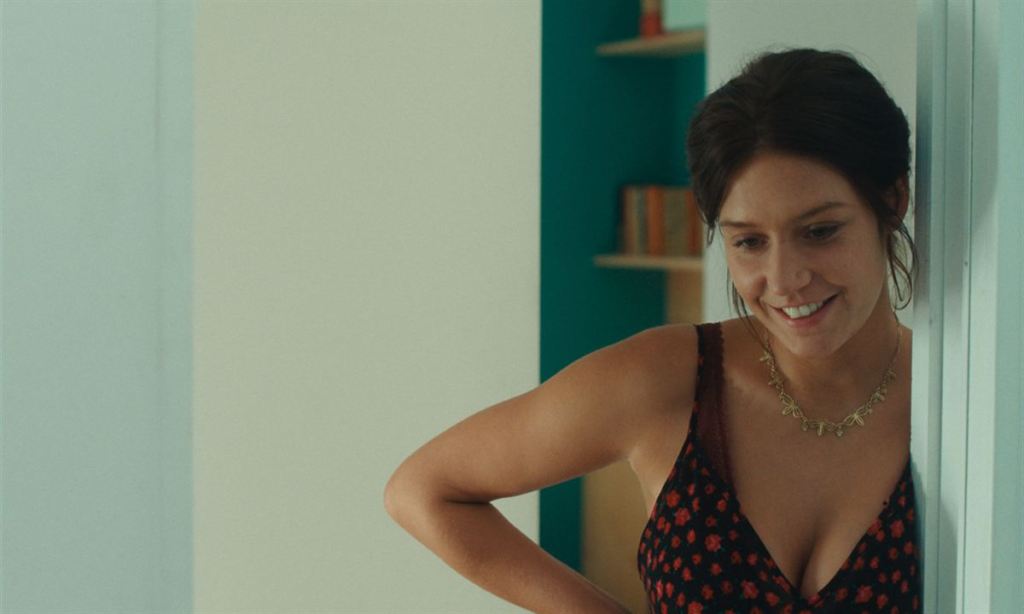
I’d like to ask you about the discourse that keeps recurring around the necessity of sex scenes in cinema. I think that in Passages these intimate moments are integral to Tomas’ development as his body language changes depending on who he is with. What’s your take on this?
I have this question that I keep asking journalists who bring up this discourse. Have you met anyone actually in person who believes that sex should not be in cinema?
No, it’s only from what I read online…
No one yet has met anyone in person so I would say doubt what you read online as a discourse of value because I’ve been in a room with 300 people and I’ve asked that question. I said, ‘would anyone like to raise their hand and say they want to stand up and say that?’ and no one raises their hand. I don’t actually think it’s an active conversation.
I really love Adèle Exarchopoulos in this and think she’s on a fantastic run between this, The Five Devils, Zero Fucks Given, and Smoking Causes Coughing. What drew you to her for the role and what was she like to work with?
I guess the reason is that she’s just an incredibly natural actor who also elevates everything to a level of mystery and beauty. She’s very much like Jeanne Moreau to the extent that she’s of the earth, but also of the sky. I think that combination of being someone you could know but never know. That’s a really nice way to be and is truly cinematic.
We actually styled her a lot like Brigette Bardot in the film. We were making the decision whether to be a realist film or an unrealistic film and we went towards the unrealistic meaning, meaning elevating everything about her to the level of icon.
What is your writing process like with your regular collaborator Mauricio Zacharias?
We spent a couple of months talking about life, cinema, story and characters and we come up with an outline that he takes and from that writes the first draft. He does what I consider the heavy lifting. The process following that first draft is a slow one where the film becomes mine. So, the last draft is mine, which is heavily influenced by what I discovered in pre-production.
What does it mean to you to have this film screen at Edinburgh International Film Festival?
I’ve been here a couple of times before and each time I’m here, I’m struck by the originality of the festival. It doesn’t feel like every other festival – it has a real voice and it has a taste for experimentation and freedom. The audiences have been invested in the history of cinema but also ready to discover something new.
What are you working on next?
I’m working on a feature about the photographer Peter Hujar that I’m making in November, strike permitting, with Ben Whishaw. In some ways it’s similar to Passages as they’re both about artists, they’re about love and sex, and they’re about what it is to try to make the most of the life you’re given.
Passages will be released in cinemas in the UK in September 2023.

 Cinema Perspective