Month: September 2014

DVD review: Salvo
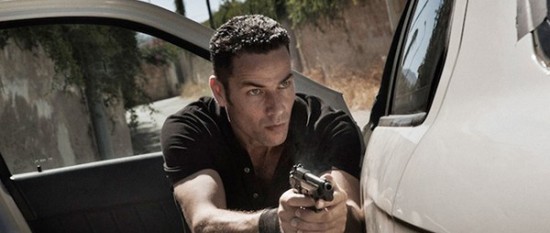
Italian cinema has become closely associated with the gangster-movie genre, yet the directorial debut of collaborators Fabio Grassadonia and Antonio Piazza has taken elements from that distinctive style of film to create something slightly different. The central, titular, character played by Saleh Bakri is a mafia hitman who whilst pursuing his next victim, meets the target’s blind sister, Rita (Sara Serraiocco). This presents an fascinating encounter which leads him to question his flailing morals. The technical aspects are bold and ambitious, the clever use of audio offering up an often intense sensory experience but the dialogue-light story wears thin, running out of ideas about halfway through.
We are with the slick assassin Salvo pretty much from start to finish, from his alarm clock waking him in his dank and derelict bed-sit, through him scoffing lunch, to driving around what appears to be the incredibly bumpy backstreets of Palermo. A wide range of camera techniques are employed, from static shots, shaky-cam over-the-shoulder car journeys to atmospheric floor sequences. For a leading man, Lacoste-loving Salvo has little to say so the bold visuals do well to hold interest and build suspense for his first meeting with Rita. This scene is a highlight, as the focus switches to the vulnerable blind sister of Mafioso man Renato. The sound heightens and we see her blurred perspective of only shapes and colours, and by placing the audience in her susceptible state the sense of danger is also ramped up. Her fragility thaws his ice-cold demeanour, stopping him in his tracks and forcing him to consider his options. Does he save the girl and change his ways or put her out of her misery?
The latter parts of the film fail to match up to the initial excitement of when Salvo first comes across Rita, and descends into convention, even angling in a little romance that sadly refuses to gel with the noir themes explored. The narrative slows down to the point where it nearly moves backwards and the soundtrack gets quite stale and repetitive. There is one entertaining scene though, where dialogue is surprisingly used quite sparingly for a conversation between Salvo and a mob boss who looks like a cross between Tony Soprano and Jimmy Saville. I am far from against a minimalist script, and loved Ryan Gosling’s hushed anti-heroes of Drive and Only God Forgives, but Bakri lacked the necessary magnetism to carry it off. Serraiocco is great with what she has to work with, and has the perfect expressionistic face to act with little material.
Salvo doesn’t tick enough genre boxes to be classed as a gangster film, yet doesn’t stray away from it far enough to become anything else. Instead, the flawed result is caught in no man’s land somewhere in the middle and despite its consistently intriguing cinematography, promising for first time feature filmmakers, it has no real lasting impact. With a stronger, more involving script, the characters would gain more depth which would in turn allow them to fully absorb the emotionally charged topic of redemptive love and take on the plot, rather than just exist within it.


See the trailer:
Top 5 Films that Broke the Fourth Wall
Definition of FOURTH WALL
: an imaginary wall (as at the opening of a modern stage proscenium) that keeps performers from recognizing or directly addressing their audience
An old term related to audience participation in theatre but in film terms, the fourth wall is essentially the screen. Usually used for comic effect, here are my five favourite uses of the technique where a character disturbs the passive audience to speak directly to camera.
-
The Wolf of Wall Street

Director Martin Scorsese is no stranger to breaking the fourth wall and in his latest masterpiece, Leonardo DiCaprio regularly lets the audience in on his illegal operations. Playing the part of Wall Street stockbroker Jordan Belfort, he takes time out from his scamming to explain financial jargon and how much money he is making. How nice of him!
For my review, click here!
-
Ferris Bueller’s Day Off

Matthew Broderick tells it like it is in Ferris Bueller’s Day Off, talking the audience through his foolproof plan to pull a sickie from school and have a day of fun. The cheeky-chappy style and delivery is copied by Saved by the Bell’s lovable rogue Zack Morris.
-
Filth
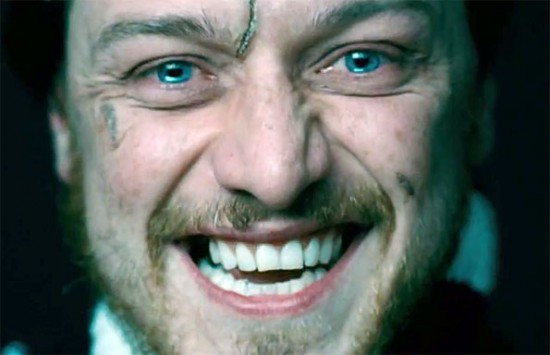
The list takes a darker turn onto the gritty cobbled streets of Edinburgh with Jon C. Baird’s adaptation of Irvine Welsh’s novel Filth. Alcoholic junkie cop Bruce Robertson is not a well man, physically or mentally, and we, as an audience, are complicit to his wicked mind games as he turns colleagues against each other and betrays his friends.
For my review, click here!
-
Funny Games

In Michael Haneke’s psychotic thriller Funny Games, the fourth wall is well and truly smashed when a character not only speaks into the camera but rewinds the film back a few minutes so that he can play it out his own way! The Austrian original version is excellent but if you don’t want subtitles, Haneke remade his own work for a wider English speaking audience with Boardwalk Empire star Michael Pitt holding the remote.
-
Annie Hall

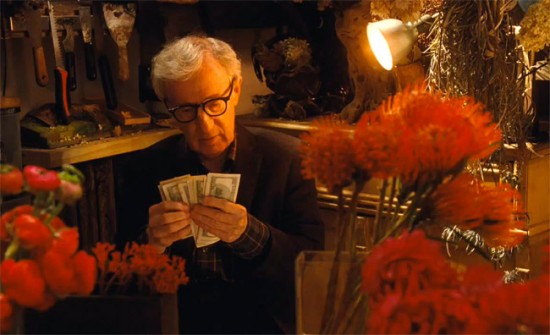
We’ve all been frustrated in a queue, being subjected to the thoughts of the outspoken, wanting to challenge them or simply tell them to keep their idiotic opinions to themselves! In the Oscar winning romantic comedy Annie Hall, stand up comedian Alvy Singer speaks up to defend the work of highly regarded philosopher Marshall McLuhan. When discussing the scene, director Woody Allen said ‘I felt many of the people in the audience had the same feelings and the same problems. I wanted to talk to them directly.”
For more analysis of Woody Allen’s work, click here!
DVD review: Benny & Jolene
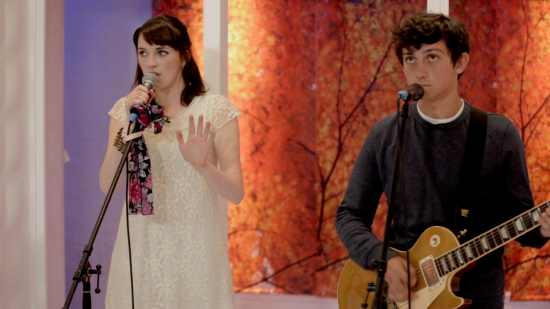
The effort of youngsters to breakthrough into the music industry has become part of British pop culture this century due to the success of Simon Cowell’s popularity contests. It’s refreshing to see a film depicting a couple of dreamers who want to do things the old fashioned, old shall we say proper way. Benny and Jolene are a folk duo, played by rising stars Craig Roberts and Charlotte Ritchie respectively. Very much a personal project from debutant director Jamie Adams, who also wrote the screenplay. Filmed in just five days, this low-budget gem is full of natural charm and wit, having a sideways glance at the music biz and media circus that goes with it.
The road-movie is filmed in mockumentary style, tinged with awkwardness. Comparisons have been made to This Is Spinal Tap, the much-loved rock-mock from the eighties, and its influence is evident in the subtleness of the writing. The leads gel well with this style, and are the perfect fit to the quirkiness of the film as a whole. Craig Roberts, known best for his role in Submarine, is a natural at playing the socially inept misfit, and is now cropping up in big US comedies doing what he does best. Charlotte Ritchie shares a certain chemistry with him on screen and from working on Fresh Meat, she is used to working with sharp scripts laden with British humour. Their difference in height makes for very amusing physical comedy, particularly a sex scene that goes terribly, but by that point in proceedings typically, awry.
Benny & Jolene is a fun little ditty which showcases the talent of its stars, as well as serving as an impressive debut for Jamie Adams, demonstrating a fantastic knack for capturing moments of cringeworthy humour. Poking fun at the media types in a lax but effective manner, there are signs of substance behind the carefree indie persona, if you see past the hipster shades. As they go through the gawky gigs, dodgy TV spots and lapses in judgement, it soon becomes hard not to cheer for the not-so-rock n’ roll underdogs.
See the trailer:
Top 5 Bruce Willis Performances
As The Cult Den celebrates one of the most famous faces in film, I remember my five favourite Bruce Willis performances.
-
Looper

The most recent of my selections, Rian Johnson’s time travel flick ‘Looper’ was a mind-bending success. Set in 2044, Joe (Joseph Gordon-Levitt) plies his trade as an assassin picking off targets sent back in time. Confused? Bruce Willis plays an old Joe sent back to be killed by his younger self, which would in turn also mean his younger self would cease to exist. If you don’t want to think about it too much, you can at least enjoy the efforts of the make-up team transforming JGL into a young Willis.
-
Die Hard
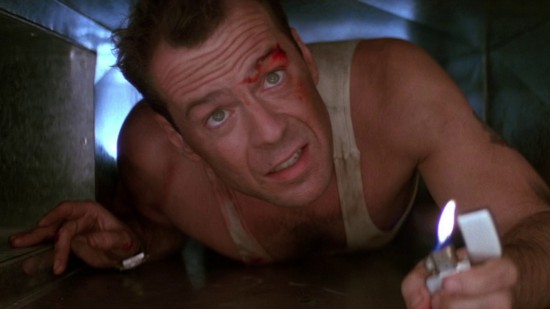
When you think of Bruce Willis, there’s a good chance the first film you will think of is Die Hard. As officer John McClane, his far-fetched antics wowed audiences around the world and despite the varying success of the various sequels, it will always go down as one of his crowning moments. Yippee Ki Yay!
-
Armageddon

Who can forget Bruce Willis’ performance as Harry Stamper, the leader of the Freedom shuttle drill team? Michael Bay’s sci-fi disaster thriller was big, bold and ridiculous, as was the all-star cast. However, that takes nothing away from the powerful closing scenes which see Willis make the ultimate sacrifice for the greater good. What a hero!
-
The Sixth Sense

The surprise ending so publicised that it sort of failed to surprise anyone, Bruce Willis gave a memorable performance as child psychologist Dr Malcolm Crowe in M. Night Shyamalan’s supernatural chiller The Sixth Sense. When he meets nine year old patient Cole Sear (Haley Joel Osment), he tries to help him with his unusual problem, leading to the much parodied line ‘I see dead people’.
-
Pulp Fiction




 Cinema Perspective